Gemstone Guides · Guide
Clear Quartz: The Master Stone — Meaning, Properties, and History
A studio guide to clear quartz — where it comes from, how it forms, why it's called the 'master stone,' and how to tell it from glass.
By Robert Anthony · · 10 min read
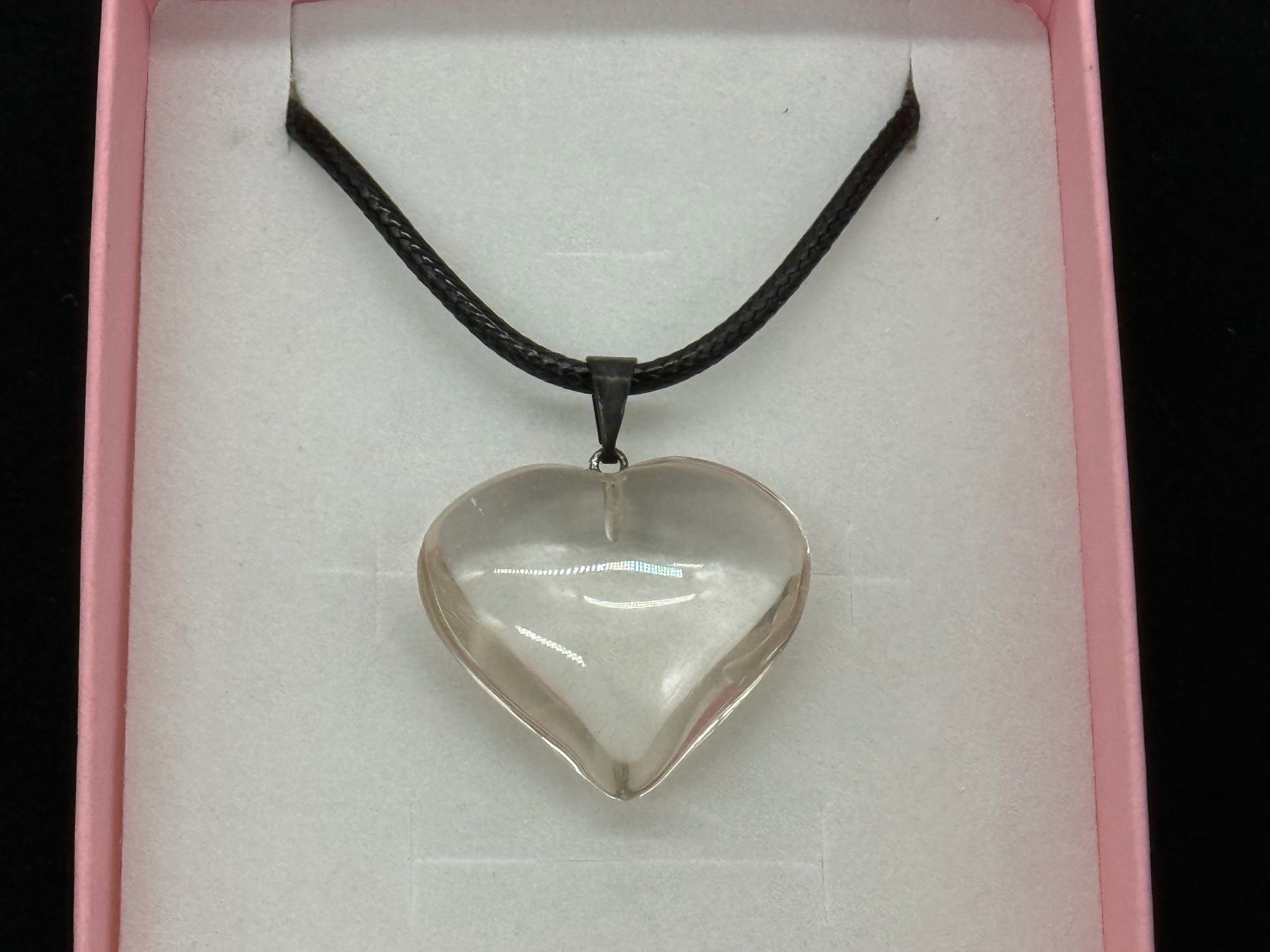
If you had to pick one stone to represent the entire world of natural crystal, it would be clear quartz. It is the most common mineral on the earth's surface, the one nearly every culture has carved into something meaningful, and the reference point every other stone gets compared against. Jewelers call it the master stone for a reason: it is clear, tough, takes a glassy polish, and gets along with almost everything you'd wear it with.
This is a plain-language guide to clear quartz — how it forms, what it has meant to people over the centuries, how it behaves as a piece of jewelry, and how to spot the real thing.
What clear quartz actually is
Chemically, clear quartz is silicon dioxide (SiO₂) — the same base composition as sand, but grown slowly under pressure into a six-sided crystal instead of ground into grains. It's a Mohs 7 on the hardness scale, which means it's harder than a steel knife and won't scratch from ordinary wear. It forms in veins in igneous and metamorphic rock, sometimes in cavities the size of a fingernail and sometimes in geodes the size of a car.
Truly transparent, colorless quartz is what jewelers call "rock crystal." The mineralogy of quartz covers the whole family — amethyst, citrine, smoky quartz, rose quartz — but clear rock crystal is the pure form all the others are colored variations of.
A very short history
The Greeks called it krystallos, meaning ice, because they believed it was water frozen so hard it would never thaw. That idea stuck for centuries: Roman writers repeated it, medieval scholars debated it, and it took until the 17th century for anyone to prove otherwise. In the meantime, people carved it into signet rings, drinking cups, reliquaries, and — famously — into the crystal spheres that Elizabethan advisors like John Dee used for scrying.
Cultures far outside Europe reached the same conclusion on their own. Clear quartz has been carved by Sumerian, Egyptian, Chinese, Mesoamerican, and Native American craftspeople, each independently deciding this was a stone worth spending hours on. When something shows up across every continent, it isn't fashion — it's a material that rewards the work.
Why it's called the 'master stone'
In the crystal tradition, clear quartz is the all-purpose stone — associated with clarity, focus, and amplification. Practitioners say it 'takes on' the intention of the wearer, which is a poetic way of describing something practical: a clear stone doesn't fight the other stones you pair with it. Layer clear quartz with sodalite, rose quartz, or obsidian and it reads as an accent rather than competition.
You don't have to buy the metaphysics to see the design logic. Clear quartz is the neutral in a stone wardrobe — the way white t-shirts are the neutral in a clothing one. That's most of what 'master stone' really means.
How clear quartz wears as jewelry
Two things make quartz an unusually forgiving stone to wear day after day. First, at Mohs 7 it resists the everyday scratches that dull softer stones like sodalite or turquoise. Second, it doesn't fade — quartz is UV-stable in a way amethyst and rose quartz aren't, so a clear quartz pendant left on a sunny dresser won't go pale over the years.
What clear quartz will do, given time, is pick up hairline surface scuffs from being knocked against buttons, zippers, and countertops. These aren't scratches into the stone so much as micro-abrasions on the polish, and they buff out easily. A soft microfiber cloth handles most of it.
Real quartz vs. glass or resin
The most common substitute you'll run into isn't another gemstone — it's leaded glass or clear resin. A few quick tells:
- Temperature. Real quartz feels cold when you pick it up and stays cool longer than glass or resin. Resin warms to the hand almost immediately.
- Weight. Quartz has real density. A quartz heart the size of a walnut feels noticeably heavier than a resin one of the same shape.
- Inclusions. Under a bright light, most natural quartz shows tiny veils, rainbows, or thread-like inclusions somewhere inside. Perfectly, uniformly flawless material at a low price is almost always glass.
- Sound. Tapped gently against a hard surface, quartz gives a slightly higher, cleaner note than glass. Not a courtroom test, but consistent.
Pairing clear quartz with other stones
Because it doesn't push any one color forward, clear quartz layers cleanly with almost anything. A few pairings that work particularly well:
- Sodalite — clear next to deep blue reads considered and slightly formal.
- Rose quartz — same mineral family, different color; the pairing looks intentional rather than matchy.
- Red jasper — clear next to a warm opaque stone gives contrast without clashing.
- Mahogany obsidian — the transparent-versus-opaque contrast reads dramatic, especially at collarbone length.
For length and layering guidance, see how to choose necklace length and layering necklaces without looking cluttered.
Caring for clear quartz
- Clean with mild soap and water. No ultrasonic cleaners, no ammonia, no harsh solvents — they won't hurt the stone itself, but they'll degrade the cord or setting around it.
- Dry it thoroughly. Water trapped where the bail meets the stone is what corrodes findings and stiffens cords.
- Store it separately. At Mohs 7, quartz will scratch softer stones (sodalite, mahogany obsidian, opal) if tossed into the same tray. Its own pouch, always.
- Buff the polish. A microfiber cloth every few weeks keeps the glassy surface glassy. Skin oils are the main enemy.
For the full routine that applies to any natural stone piece, see our complete natural stone jewelry care guide.
A stone that never really goes out
Trends in stone jewelry come and go — one year everyone wants turquoise, the next it's malachite, the next it's whatever a celebrity was photographed wearing. Clear quartz has never had a moment because it has never left. It shows up in Roman intaglios, Ming dynasty carvings, Victorian mourning jewelry, and last year's runway shows for the same reason: it's the stone that lets the shape do the talking.
If you're new to natural stone jewelry, a clear quartz piece is the easiest place to start. It teaches you what real stone feels like — the weight, the coolness, the way light moves through it — without asking you to commit to a color you might grow out of. And if you already own five other stones, a clear quartz piece is the one that will make the rest of them look better.
Photographed in-studio by Robert and Angela Anthony. Questions about a specific stone or a custom piece? Reach out anytime.
Keep reading
Gemstone Guides
Heart-Shaped Stone Pendants: The Quiet Symbolism of a Carved Stone Heart
Why the heart shape endures in stone jewelry — its history, symbolism, how different stones change the meaning, and how to choose one.
Gemstone Guides
Sodalite: The Blue Stone of Calm, Clarity, and Honest Communication
A complete guide to sodalite — its history, meaning, Mohs hardness, and why this deep-blue stone is a favorite for clear communication.
Stone Care & Cleaning
How to Care for Natural Stone Jewelry: A Complete Guide
Clean, store, and protect natural stone jewelry — from amethyst to obsidian — with a jeweler-tested care guide built to last.