
Gemstone Guides · Guide
Heart-Shaped Stone Pendants: The Quiet Symbolism of a Carved Stone Heart
Why the heart shape endures in stone jewelry — its history, symbolism, how different stones change the meaning, and how to choose one.
By Robert Anthony · · 9 min read
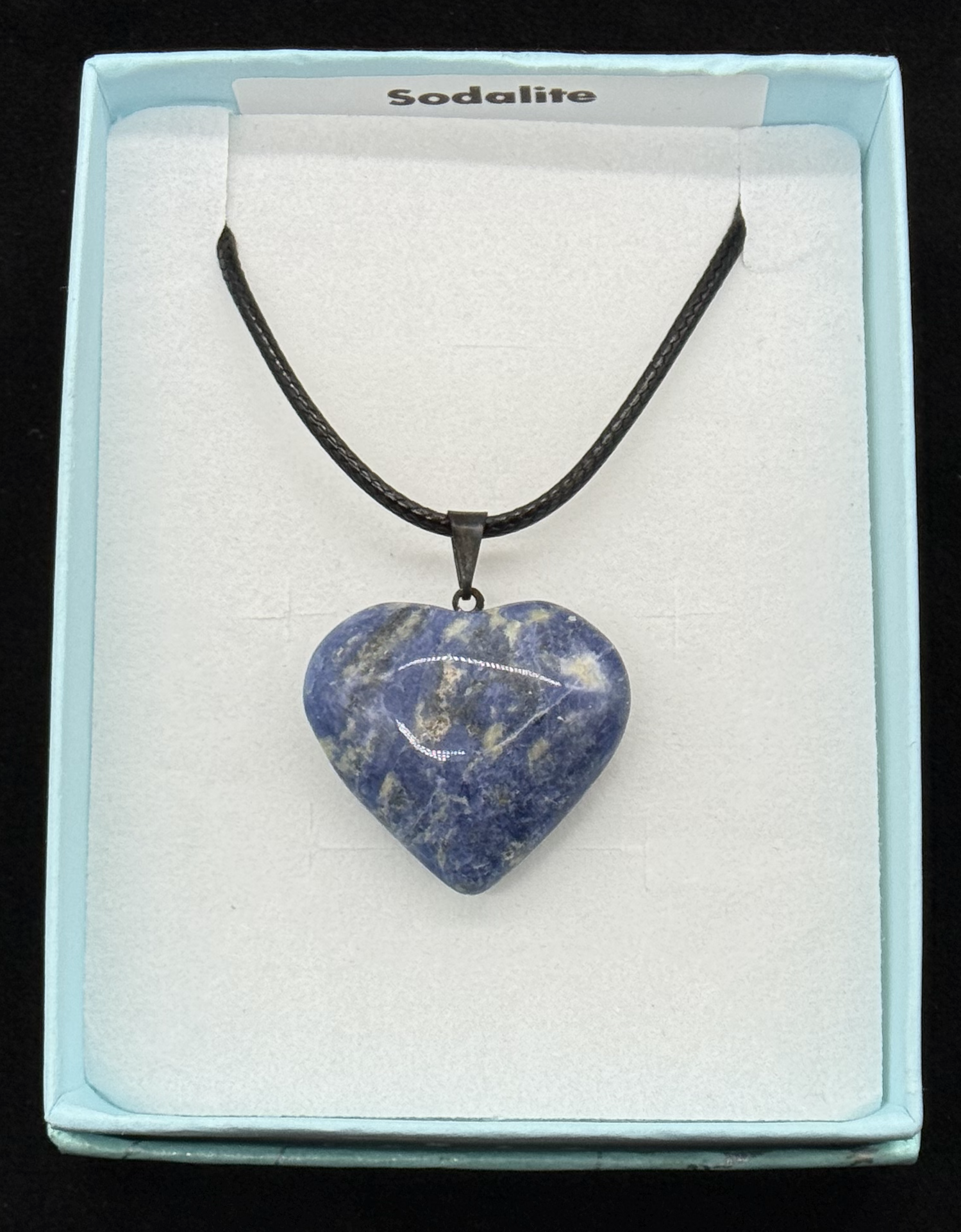
A stone heart is a small object with a long memory. Long before it was printed on cards and stitched onto sweaters, the heart shape was carved into stone, cast in bronze, and worn against the skin — a compact way of saying something too big to say out loud. What draws people to a carved stone heart today is the same thing that drew them to one five hundred years ago: a piece of the earth, shaped by hand into the oldest symbol we have.
This is a working guide to heart-shaped stone pendants — where the shape came from, how different stones change what the heart 'says,' how the good ones are cut, and how to pick one you'll actually reach for.
A very short history of the heart shape
The stylized heart — two lobes above a point — doesn't look much like the organ, and that's not an accident. Its earliest appearances in Europe show up in the 13th and 14th centuries in illuminated manuscripts and playing cards, well before anatomy was widely studied. By the Renaissance it was already a shorthand for love, loyalty, and devotion, and it was being carved into jewelry, pendants, and rings across Europe. Wikipedia's history of the heart symbol traces the visual lineage in more depth.
What matters for a pendant is this: the shape is old enough to have stopped belonging to any one era. A carved heart doesn't look dated. It reads the same on a linen collar as it did on a velvet doublet.
Why carve a heart out of stone
Stone is patient. Metal can be poured into a mold in an afternoon; a stone heart has to be shaped by hand from a rough block, and every one comes out slightly different — the veining, the density of the polish, the way the light catches an edge. That's the appeal. A stone heart is a symbol that also carries the specific fingerprint of the material it came from.
The best stone hearts share a few traits: a symmetrical outline, a full 'plump' curve rather than a flat silhouette, a rounded back that sits comfortably against skin, and a bail that's centered and secure. Cheap ones cut corners on all four.
How different stones change what the heart means
The shape says love; the stone specifies what kind. Two stones we work with in the studio show this well.
Sodalite — quiet, honest blue
Sodalite is a deep blue stone shot through with white calcite veining, like a night sky with slow clouds. It is a sodium aluminum silicate, typically Mohs 5.5–6, which puts it in the middle of the hardness range — fine for daily wear if you store it with care.
Symbolically, sodalite has long been associated with clarity, honesty, and calm communication. A sodalite heart tends to suit a gift with a quieter message: a steady friendship, a partner you can speak plainly with, or someone moving through a season where they need to trust their own voice.
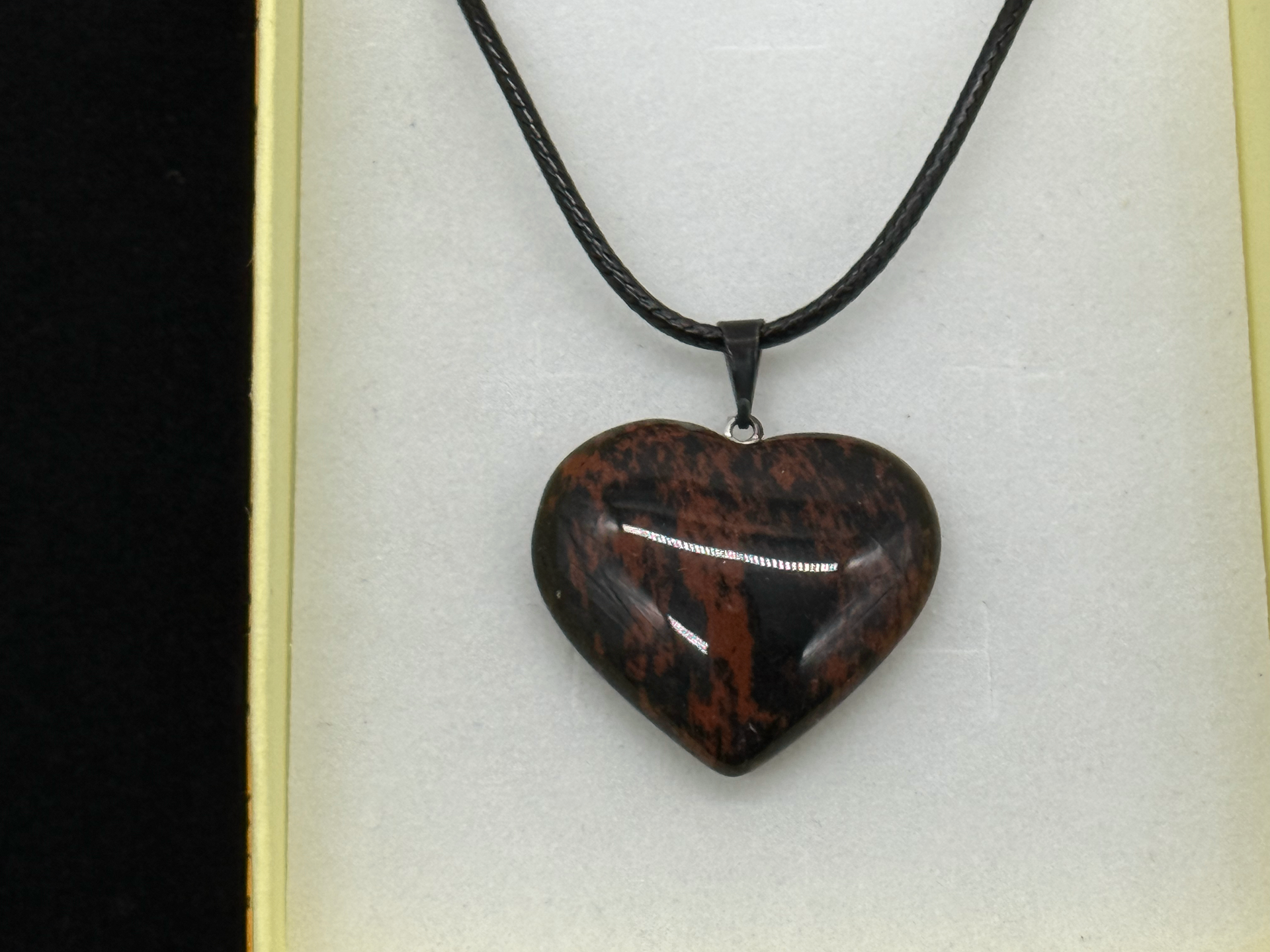
Mahogany obsidian — warm, protective, deep
Mahogany obsidian is volcanic glass — obsidian streaked with iron-rich hematite that gives it a deep, warm red-brown flowing through the black. Held to light, the mahogany bands almost look painted on. It's Mohs 5–6 and takes a very glassy polish.
The traditional read on obsidian is protective — a stone people historically wore or kept near them for grounding in unsettled seasons. The mahogany variant softens that; it's less severe than pure black obsidian, warmer, more forgiving. A mahogany obsidian heart tends to land well for someone in a period of change: a move, a new chapter, a fresh start where they want something warm and steady against them.
Other stones, briefly
- Rose quartz — the classic. Soft pink, associated with self-love and gentleness. Reads romantic without being loud.
- Sodalite — deep blue veined with white. A heart for clear-eyed love; steady, honest, considered.
- Amethyst — purple, calming. Traditionally worn for peace of mind — a good heart for a season of stress.
- Tiger's eye — warm gold and brown with a chatoyant flash. Reads confident; a heart for courage rather than tenderness.
How to choose one
There's no rule, but three questions cut through most of the noise:
- Who is going to wear it, and against what? Skin tone, wardrobe colors, and whether they wear silver or gold matter more than symbolism. A cool-toned wardrobe takes sodalite or amethyst well; warm palettes lift mahogany obsidian, tiger's eye, and rose quartz.
- How rough is their day? A softer stone (sodalite, rose quartz) suits someone whose jewelry lives on a nightstand. A tougher stone (obsidian, tiger's eye, red jasper) survives someone who forgets to take it off.
- What's the message? A gift heart doesn't need a speech attached, but choosing the stone with intent is worth it. Grounding, tenderness, courage, clarity — pick one and let the stone carry it quietly.
How to wear a stone heart without it feeling twee
The trick with any heart pendant is letting the stone lead. A carved stone heart on a simple black cord or a fine silver chain reads adult and considered; the same shape in glossy plastic on a chunky chain reads like a keepsake from a school dance. Keep the surroundings quiet and the heart looks like jewelry, not costume.
- Solo on a cord, at collarbone length, over a plain t-shirt or crewneck
- Layered under a longer, thinner chain — the heart sits closer to the throat and reads like a private thing
- On a fine silver chain with a shirt collar, where the polish catches light
For lengths, see how to choose necklace length. For layering, see layering necklaces without looking cluttered.
Caring for a carved stone heart
Carved stones have thinner edges than tumbled ones — the two lobes at the top and the point at the bottom are where damage happens first. A few habits keep a heart pendant looking new:
- Take it off before sleep and showers. Cord fatigue and steam are the two biggest culprits behind a heart that suddenly feels loose on the bail.
- Wipe it after wearing. A soft microfiber cloth, thirty seconds. Skin oils dull polish over months.
- Store it in its own pouch. Never in a shared tray with other stones — the point of the heart chips against anything harder.
- Keep it out of direct sun. Some colored stones (rose quartz, amethyst) fade under UV. A sunny windowsill is not a display case.
For a full routine, see our complete natural stone jewelry care guide.
A gift that doesn't age out
The heart shape doesn't belong to a decade. A stone heart bought this year will look the same on a shirt collar in 2040 — worn, maybe a little softer at the edges, but still saying exactly what it said the day it was given. That's rare in a category as trend-heavy as jewelry, and it's the real argument for choosing one.
If you're weighing a stone heart as a gift and want to talk through which one suits the person, we're always happy to help. Every heart in the studio is hand-picked, cord-strung, and boxed by us — no two are quite the same.
Photographed in-studio by Robert and Angela Anthony. Questions about a specific stone or a custom piece? Reach out anytime.
Keep reading
Gemstone Guides
Sodalite: The Blue Stone of Calm, Clarity, and Honest Communication
A complete guide to sodalite — its history, meaning, Mohs hardness, and why this deep-blue stone is a favorite for clear communication.
Gemstone Guides
Mahogany Obsidian: A Guide to the Volcanic Glass
What mahogany obsidian is, where it forms, how it wears, and why it chips more easily than crystalline stones.
Stone Care & Cleaning
How to Care for Natural Stone Jewelry: A Complete Guide
Clean, store, and protect natural stone jewelry — from amethyst to obsidian — with a jeweler-tested care guide built to last.