Styling & Wearing · Guide
Where to Buy Handmade Jewelry in 2026: The Return of Small Studios, Stones, and Slow Craft
Where to buy handmade stone jewelry in 2026 — from small studios and maker markets to the slow-craft brands celebrities are actually wearing.
By Robert Anthony · · 9 min read
Somewhere between 2020 and now, the mood around jewelry quietly shifted. The mall chains that dominated the last two decades — the ones built on plated metal, glued stones, and disposable pricing — are closing stores. The category people actually want is smaller, slower, and often made by one or two hands. If you've been trying to figure out where to buy jewelry that isn't going to tarnish in a summer or look like everyone else's, this is the map.
The fast-fashion collapse, in one paragraph
The numbers are no longer subtle. Fast-fashion earnings warnings, Shein-and-Temu regulatory battles, and back-to-back editorials in Business of Fashion and Vogue Business have made the same point: shoppers are buying fewer, more durable pieces, and they want to know who made them. The McKinsey State of Fashion report has tracked the shift for several years running, and the environmental case laid out in The Guardian's fast-fashion coverage is now common ground. The reaction — for jewelry specifically — has been a return to handmade.
What celebrities and stylists are actually wearing
The high-visibility version of this trend is easy to spot once you're looking for it. It's not what's on the red carpet — it's what's in candid street photos, on podcast sets, and in personal Instagram feeds.
- Crystal and stone jewelry has gone fully mainstream. Adele has spoken openly for years about carrying crystals; Vogue's piece on her crystal habit is the most-cited example. Miranda Kerr has built an entire skincare line around rose quartz. Victoria Beckham has talked about wearing crystals under her clothes for a decade.
- Handmade pendants over branded logos. Bella Hadid, Kendall Jenner, and Hailey Bieber have all been photographed in stacked stone and pearl pieces from independent makers rather than luxury houses — a shift Vogue Business has covered as the "quiet luxury" turn in accessories.
- Talismans over statement pieces. Katy Perry, Naomi Campbell, and Kate Hudson have all been public about wearing crystals or engraved pendants tied to personal meaning rather than trend.
- Men are wearing more, and it's mostly stone. Beaded bracelets in red jasper, tiger's eye, and onyx now show up on podcasters, actors, and athletes who wouldn't have worn jewelry a decade ago. It reads as considered rather than flashy — closer to a watch than to a chain.
We're not saying celebrities are buying our specific pieces — they're not, and the point isn't to name-drop. The point is that the aesthetic the top of the market has moved toward — natural stone, hand-set pieces, small-batch pendants — is the same aesthetic that small studios like ours have been quietly making the whole time. The trickle-down finally caught up with the source.
Where to actually buy handmade jewelry in 2026
1. Independent studios with their own websites
This is the top of the list on purpose. When you buy directly from a maker's own site, the maker keeps 100% of what you pay minus payment processing — no marketplace cut, no ad auction. You also get direct communication if something needs sizing, resizing, or a custom variant. Our own shop works this way, and so do most small studios worth following. The tradeoff is discovery: you have to know the studio exists.
2. Etsy — with filters
Etsy is still the largest marketplace for handmade, but it now hosts a huge amount of drop-shipped and machine-produced inventory alongside real makers. To find actual handmade jewelry there:
- Filter by handmade only, and by ships from in your country or region.
- Look for shops with fewer than a few thousand sales and photographed-in-context product images (a hand, a real surface, natural light) rather than white-background CGI.
- Read the shop's about page. Real makers name their process; resellers don't.
3. Local craft fairs, holiday markets, and gallery shows
The revival of Saturday markets and pop-up craft fairs is one of the most under-reported parts of the handmade turn. You get to hold the piece, meet the maker, and ask questions no product page will answer. For stone jewelry specifically, gem-and-mineral shows are worth going to at least once — you'll never look at commercial gemstones the same way after.
4. Curated small-batch platforms
Sites like The Citizenry, Goldune, Verishop, and a growing set of independent-first marketplaces have taken on the job of curating small makers so shoppers don't have to. They cost more than Etsy and less than the department store, and the quality floor is high. Look for platforms that name every maker and disclose where each piece is produced.
5. Instagram and TikTok — for discovery, not checkout
The best use of social feeds is finding a maker whose work you love, then following the link to their own website to buy. Buying inside the app is fine, but you lose the direct relationship with the studio and often pay for the platform's ad load in the process.
What's in right now — and probably staying
Natural stone pendants over plated metal
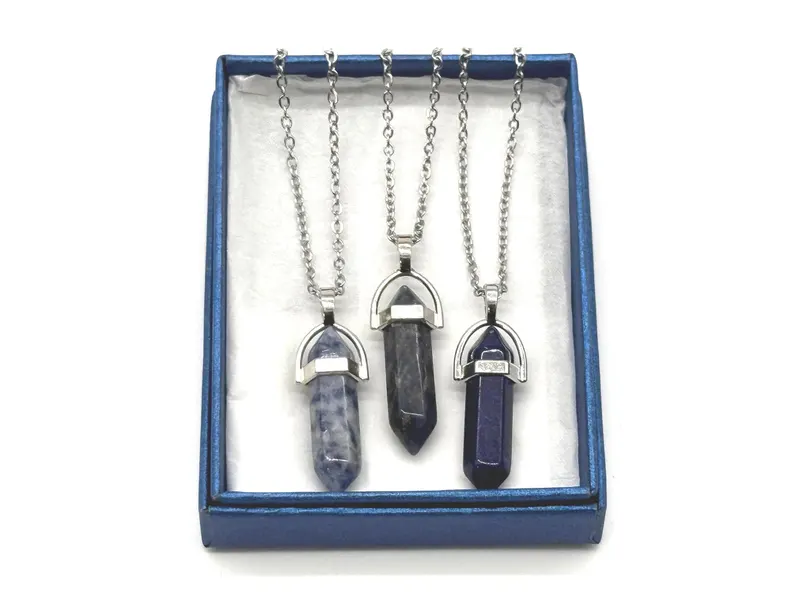
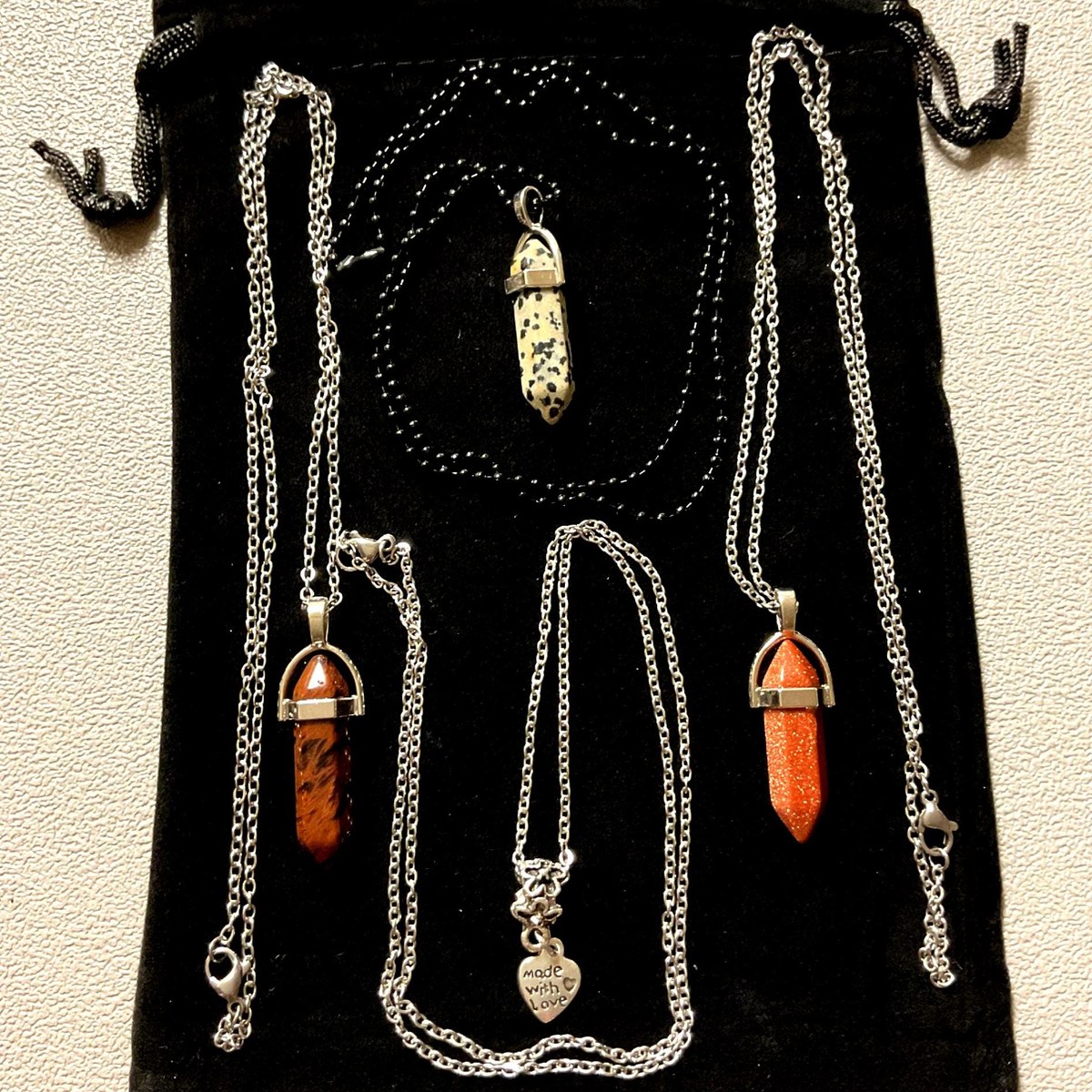
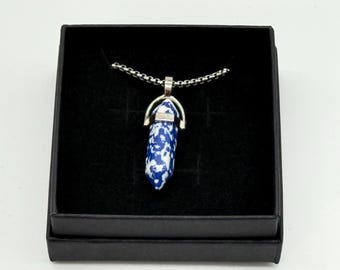
The single biggest shift in the past two years is the return of visible, honest materials. Buyers want to see the grain of the stone, the actual color of the metal, the wire that holds a crystal in place. Our note on handmade versus mass-produced covers the mechanics — why glued settings fail, why cast-and-drilled beats stamped-and-plated. Pieces like our sodalite crystal point and tiger's eye pendant live in that category.
Wire-wrapped crystals
Wire-wrapped points — amethyst, clear quartz, smoky quartz — have gone from festival table to everyday wear. The reason is honesty of process: you can see the wrap, you can see the stone, and no two are identical. The wire-wrapping guide covers what to look for.
Sets and gift-boxed pieces
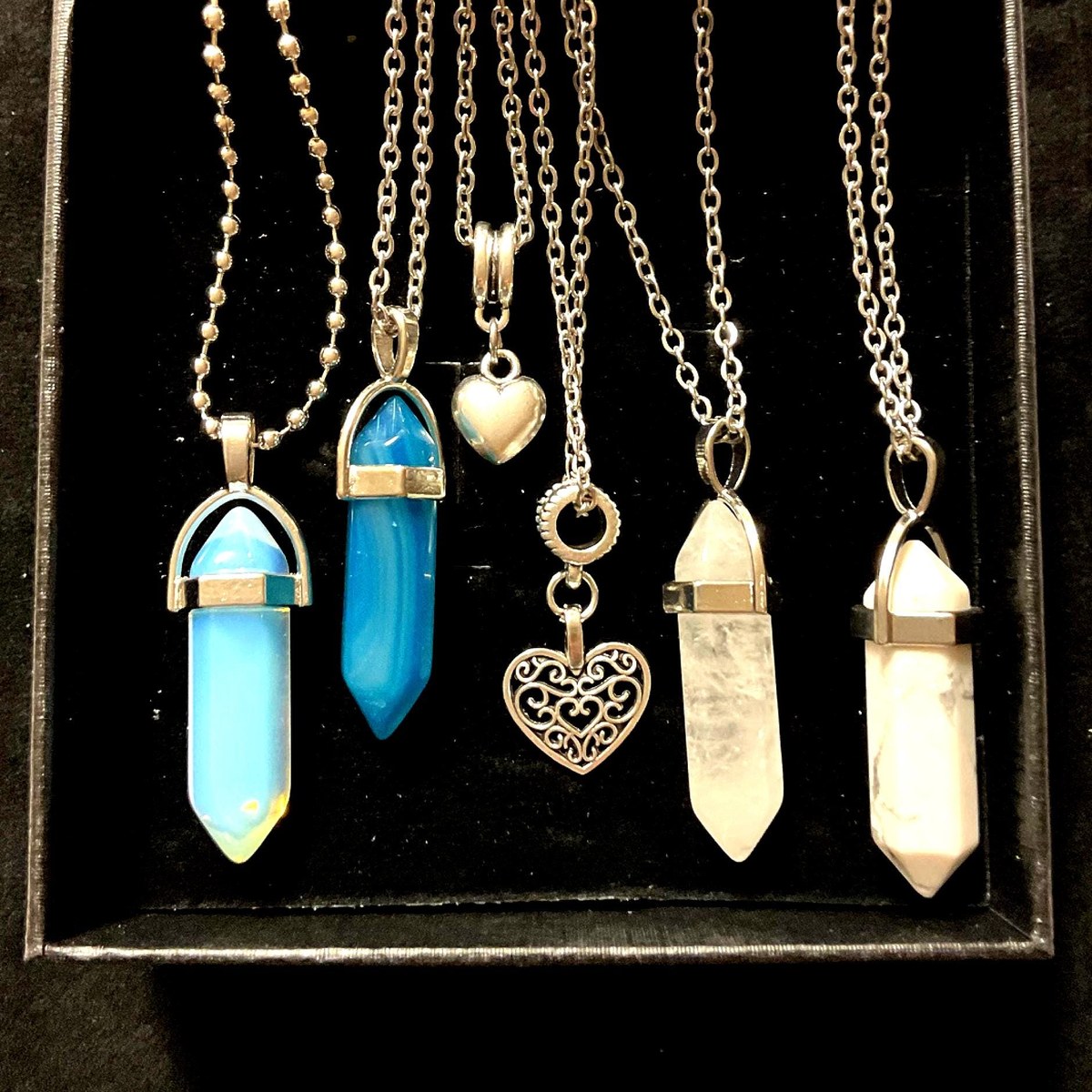
Gift-first buying is up sharply — friends buying for friends, couples buying for each other, adult children buying for parents. Sets that arrive already boxed remove the last friction. The necklace sets in the shop — pieces like the opalite/agate/quartz crystal and heart set or the mahogany obsidian and jasper set — sell disproportionately during gift seasons for that reason.
Meaningful charms and engraved pieces
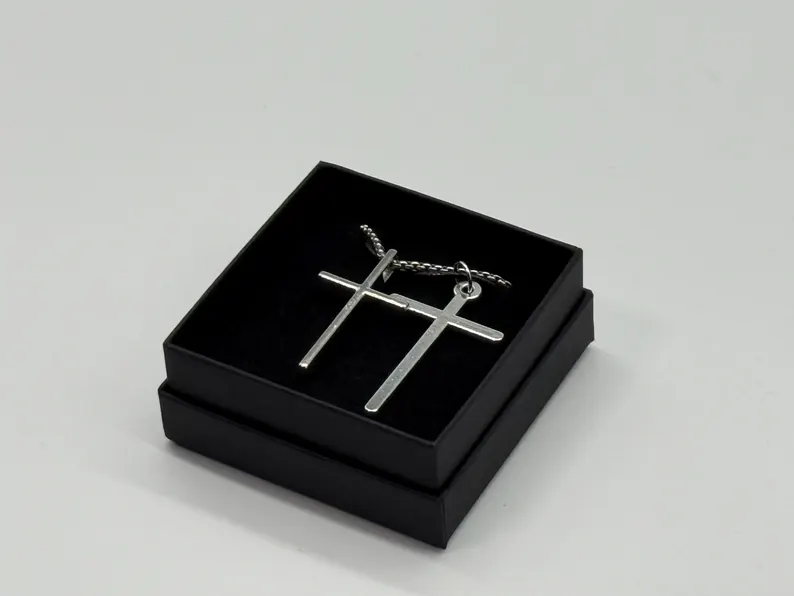
Engraved dog tags, charm necklaces with a single word, and initial pendants are up across the board. There's a reason: after a decade of algorithmic sameness, people want something that means something specific to them. Our 'Made With Love' charm necklace and the laser-etched aluminum dog tags on the services page are in that lineage.
Stacking, not statement
One big pendant is out. Three thin chains at three lengths, or a stacked pair of stone bead bracelets, is in. The layering guide covers the mechanics; the studio gallery has photographs of most of the combinations we get asked about.
A quick buyer's checklist
Before you buy anything called handmade, run through this list. It'll save you from most of the low-effort inventory that still floods marketplaces:
- Who made it? A real listing names a person, a studio, or a two-person team. Not a brand and a warehouse.
- Where was it made? A country or a city, not a vague region.
- What is it made of? Real listings name the stone, the metal alloy, and the cord or chain material.
- Are the photos real? Multiple angles, real surfaces, a hand somewhere. Not a single CGI-perfect white-background shot.
- Does the shop answer messages? Send a small question before buying. Real studios respond in a day or two; resellers respond with copy-pasted templates.
Where we fit
We're a two-person studio — Robert makes the pieces, Angela shoots most of the photographs, and everything ships from our home. Nothing is drop-shipped, nothing is white-labeled, and every photograph in the studio gallery was taken here on the same pieces we sell. If the shift toward slow, small, handmade is real — and by every measure that matters, it is — that's the corner we've been sitting in the whole time. The shop has what's currently available, the services page covers custom engraving and laser work, and the contact page is the fastest way to reach us for anything not on the shelf.
Further reading
- Business of Fashion — State of Fashion report — annual industry snapshot, including consumer sentiment on fast fashion.
- McKinsey — The State of Fashion — retail data on the slowdown of ultra-fast fashion.
- The Guardian — fast-fashion coverage — running archive of environmental and labor reporting.
- Vogue Business — quiet-luxury and independent-maker coverage.
- Our note on handmade vs. mass-produced jewelry — the mechanical case, from the bench.
Featured pieces
From the studio
Hand-strung and finished in-studio. Every piece from our shop can be restrung or re-set at cost — just reach out.
Keep reading
Studio Notes
Handmade vs. Mass-Produced Jewelry: What Actually Differs
A practical breakdown of what changes when jewelry is made by hand — construction, materials, finishing, and longevity.
Styling & Wearing
Layering Necklaces: Lengths, Pairings, and What Not to Do
A studio guide to layering stone pendants and chains — chain lengths, tangling prevention, and how many is too many.
Gemstone Guides
Wire-Wrapped Crystal Pendants: Craft, Character, and Care
How wire-wrapped crystal pendants are made, why every piece is one-of-a-kind, and how to care for the wrap and the stone.
Studio Notes
Why We Source Natural Stones (and How We Choose Them)
A studio note on why every stone we sell is natural, how we vet suppliers, and what that means for the pieces you wear.
Studio Notes
A Free Studio Photography Gallery for Writers, Artists, and Creators
Original in-studio photographs of natural stone jewelry and handmade pendants — free to use in articles and video with attribution.
Studio Notes
Why Veteran-Owned Businesses Matter (and How to Find Them)
Support veteran-owned businesses with your wallet. Learn what the label means, where to shop, and why small veteran-run studios matter.