Gemstone Guides · Guide
How to Tell Real Natural Stone from Imitation Jewelry
Spot dyed howlite, glass, resin, and other fake stones before you buy. A studio guide to testing necklaces by eye and by feel.
By Robert Anthony · · 7 min read
A lot of what gets sold as 'natural stone' is not stone at all. Walk through any craft market or scroll through enough listings and you will find dyed white howlite passed off as turquoise, glass beads labeled 'crystal,' and resin pendants painted to look like amethyst. The pieces can be pretty, but they do not wear, age, or feel like real stone.
This guide covers the quick, no-equipment tests we use in the studio to confirm a stone is genuine before we list it. You can do most of them at a market stall or in front of your own jewelry box.
Why imitations are so common
Real stone is variable. Every batch has different color, veining, and inclusions, which makes mass production hard. Manufacturers solve that by dyeing uniform white minerals, casting glass or resin in molds, or pressing stone powder back together with dye and glue. The result looks consistent, which buyers often mistake for 'higher quality.'
Six quick tests you can do anywhere
- Look for variation. Hold the pendant under a bright light and move it. Real stone has color that shifts — bands, clouds, tiny flecks, or veining. Dyed or manufactured material is usually flat and uniform.
- Feel the temperature. Real stone feels cool when you pick it up and stays cool for a few seconds. Resin warms almost instantly. Glass is in between.
- Check the weight. A real stone pendant has density. Plastic and resin feel light for their size. Glass is heavier than resin but often too perfect.
- Inspect the surface. Natural stone, even when polished, has slight texture under magnification. Glass is perfectly smooth. Dyed stone often shows color pooled in cracks or around drill holes.
- Test with water. A drop of water on a porous dyed stone soaks in and darkens the surface briefly. Real quartz or obsidian beads water off. (Skip this test on cord or plated metal.)
- Read the listing. Vague names like 'new jade,' 'olive jade,' or 'African turquoise' are red flags. A reputable seller names the actual stone.
For more on listing language, see our guide to reading a gemstone listing before you buy.
Common imitations and what they really are
- Dyed howlite or magnesite sold as turquoise. These are soft, porous white minerals that take dye easily. They feel chalky and the color is too even.
- Glass sold as quartz or obsidian. Glass has no inclusions, no internal variation, and often contains small bubbles. Real clear quartz has tiny veils or rainbows; real obsidian has a sharp, conchoidal break pattern if chipped.
- Resin sold as amber or opal. Resin is warm, light, and often too flawless. It can also smell faintly synthetic when rubbed hard.
- Reconstituted 'stone' composite. Small stone fragments mixed with dye and glue. It looks grainy under magnification and chips differently from solid stone.
What we do in the studio
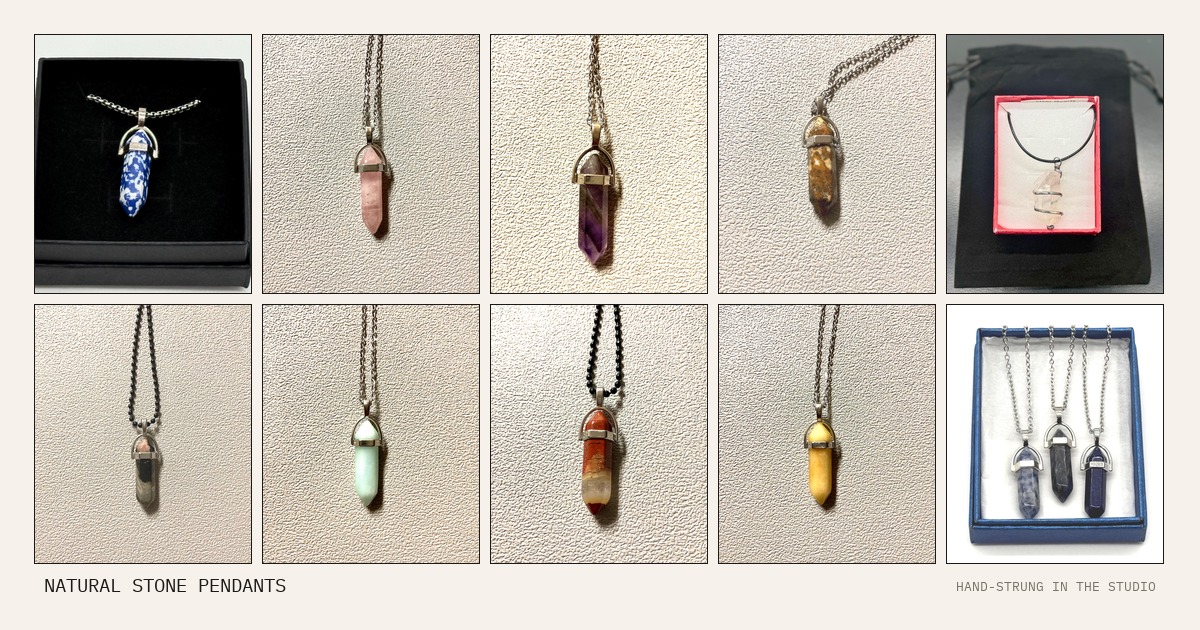
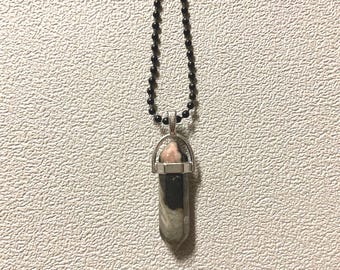
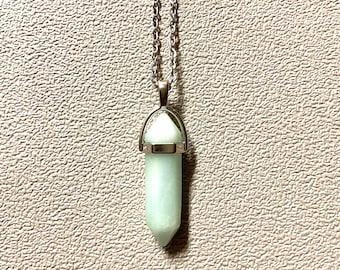
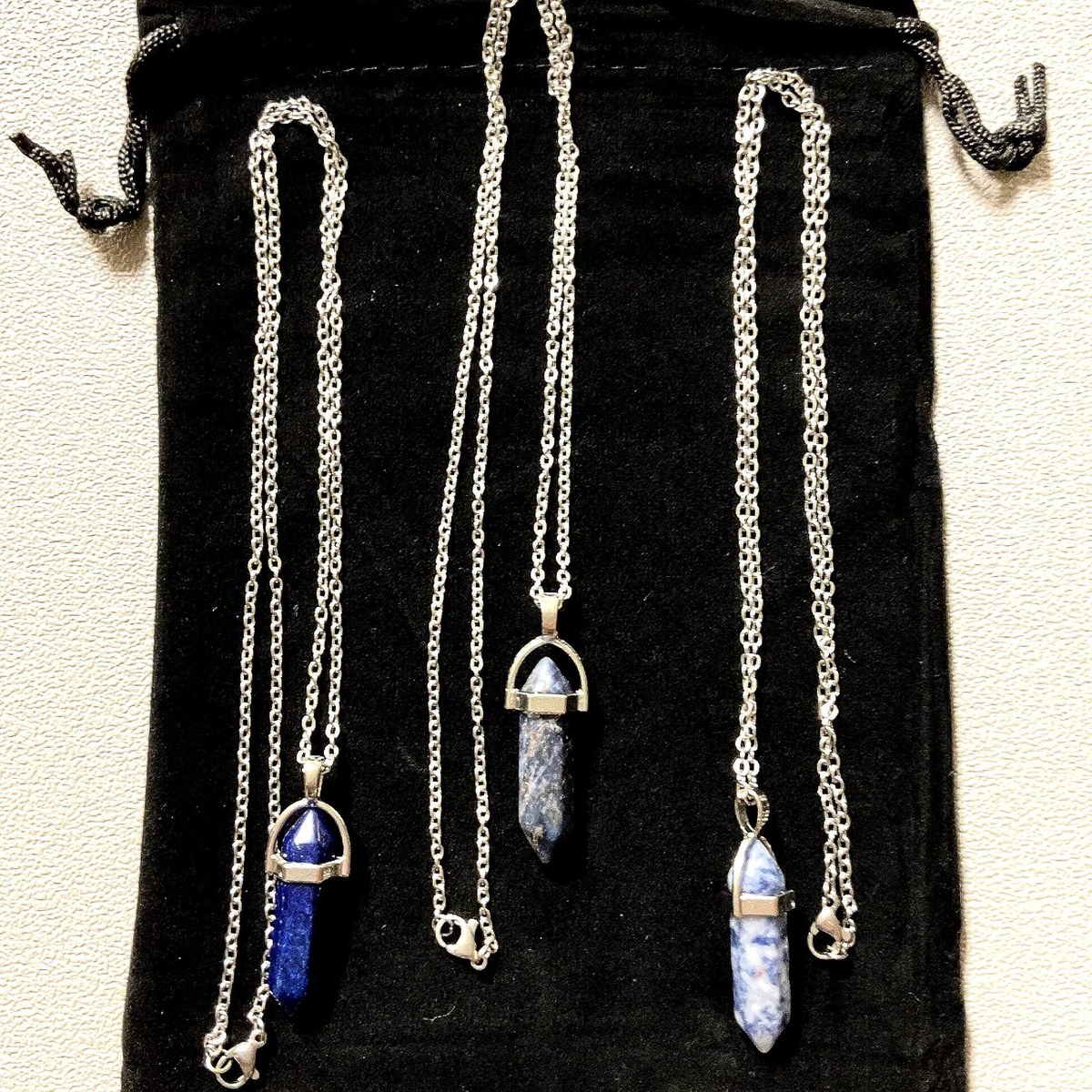
Every stone we photograph is checked by eye and by hand before it goes into a necklace or pendant. We source from suppliers we know, photograph each piece individually, and list it under its actual name — sodalite, amethyst, clear quartz, mahogany obsidian, tiger's eye, red jasper, rose quartz. No modifiers, no borrowed names.
If you are unsure about a piece you already own, send us a photo. We are happy to look at it and tell you what we see.
Caring for real stone jewelry
- Wipe with a dry or barely damp cloth after wearing.
- Skip ultrasonic cleaners and steam — they can damage softer stones and weaken cord.
- Store each piece separately so harder stones do not scratch softer ones.
- Keep perfumes, lotions, and household cleaners away from porous stones.
For the full care routine, see our complete natural stone jewelry care guide.
Featured pieces
From the studio
Hand-strung and finished in-studio. Every piece from our shop can be restrung or re-set at cost — just reach out.
Keep reading
Gemstone Guides
What Is a Natural Stone Necklace, Exactly? A Studio Buyer's Guide
Natural stone necklaces explained — what they are, how to spot real stone, which stones we carry in the studio, and how to choose one you'll actually wear.
Gemstone Guides
How to Read a Gemstone Listing Before You Buy
Decode the language in gemstone jewelry listings — treated, dyed, reconstituted, natural, and lab-created — so you know exactly what arrives in the box.
Stone Care & Cleaning
How to Care for Natural Stone Jewelry: A Complete Guide
Clean, store, and protect natural stone jewelry — from amethyst to obsidian — with a jeweler-tested care guide built to last.