Gifting · Guide
Cork Coasters and the Small Details That Make a Party Feel Hosted
Why cork coasters are the cheapest upgrade to a party table — how cork performs against condensation, what makes a set feel gifted, and free planning resources.
By Robert Anthony · · 8 min read
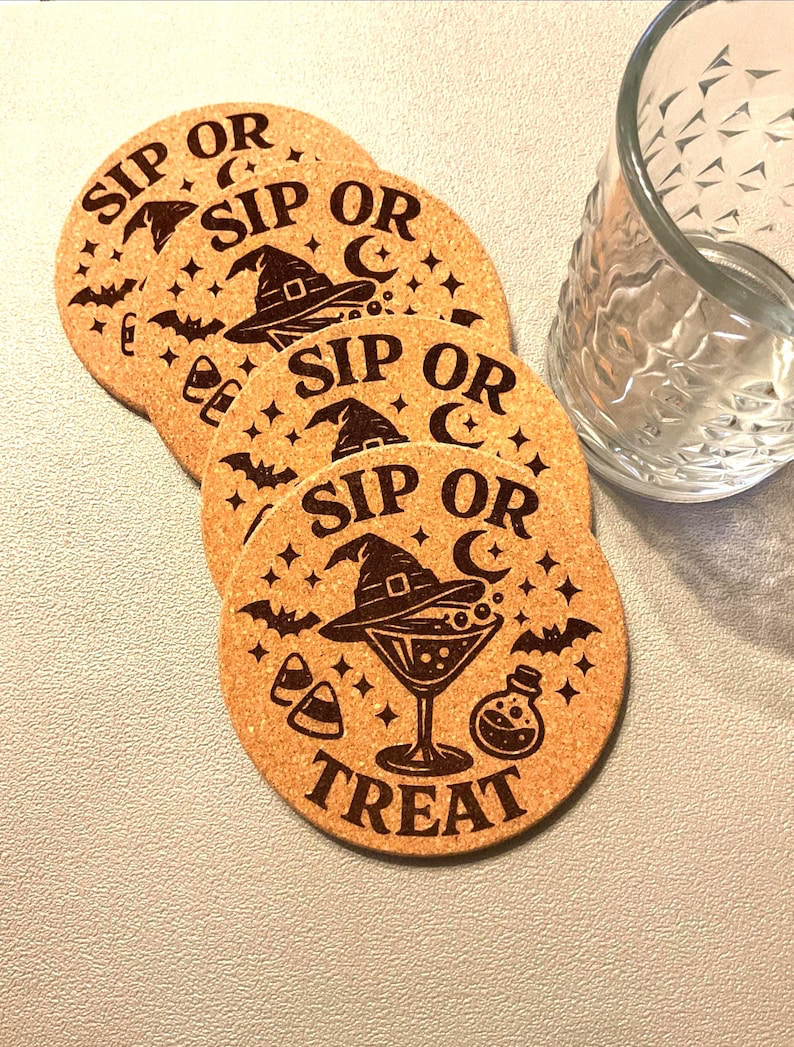
Nobody arrives at a party and says the coasters were nice. What they notice is the feeling that someone thought about the room before they walked into it. That feeling is built out of small, cheap decisions — where the drinks live, whether there is somewhere to set a glass down, whether the table survives the night.
Robert makes these in a small Vacaville, California studio, and the coaster is the piece customers come back for more than anything else. Not because it is impressive. Because it is the thing they actually use.
Why cork, specifically
Cork is bark harvested from a living oak every nine years or so; the tree keeps growing. It is closed-cell, which is the property that matters here — the cells trap air, so cork absorbs condensation at the surface without swelling, then releases it as it dries. That is why a cork coaster does not stick to the bottom of a cold glass the way a paper pulp one does.
- Grip. High friction on both faces. It stays put and it protects the finish underneath.
- Heat tolerance. Cork is a genuine insulator, so the same blank handles a hot mug and an iced drink.
- Quiet. No clack when a glass lands. Small thing, but it is why bars use it.
- Renewable. Harvested without felling the tree, and the material is compostable at end of life.
- It takes a burn beautifully. Etched cork goes deep chocolate against a warm tan — contrast without any ink.
The table, in the order guests encounter it
Hosting is choreography more than decoration. Walk the room the way a guest will and fix the friction points:
- Entry. Somewhere to put keys, a bag, and a coat. If there is nowhere, people hold things all night and never relax.
- The drink station. Glasses, ice, one signature pour, and a stack of coasters right there. Put the coasters where the drinks are made, not where you hope they will be set down.
- Landing spots. Every seat needs a surface within arm's reach. A side table and a coaster beats a coffee table across the room.
- Light. Lamps and candles at eye level, overheads off. Nothing changes a room faster and it costs nothing.
- The end. A visible spot for empties. Guests want to help; make it obvious how.
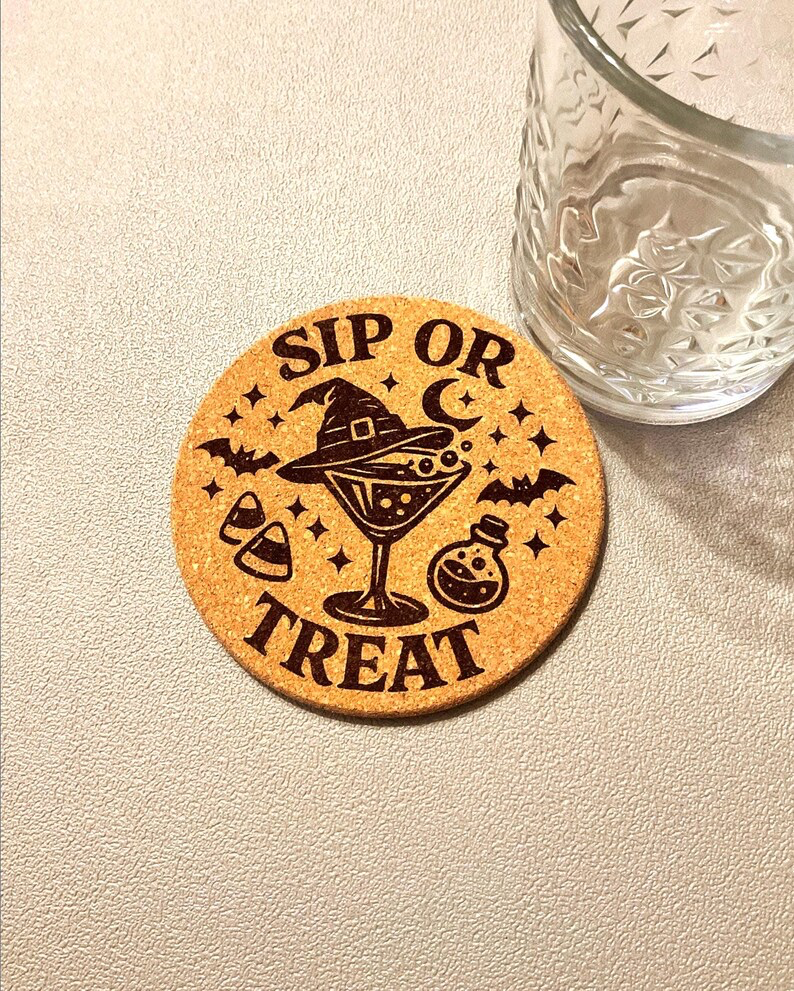
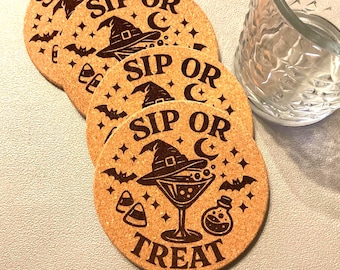
A Sip or Treat set sitting on the bar cart does two jobs at once — it saves the wood and it tells people the drinks are for them.
What makes a set feel gifted instead of bought
The difference between a product and a gift is almost entirely presentation and specificity. Three things do the heavy lifting:
- A set, not a single. Four is the number that reads as generous without becoming a burden to store.
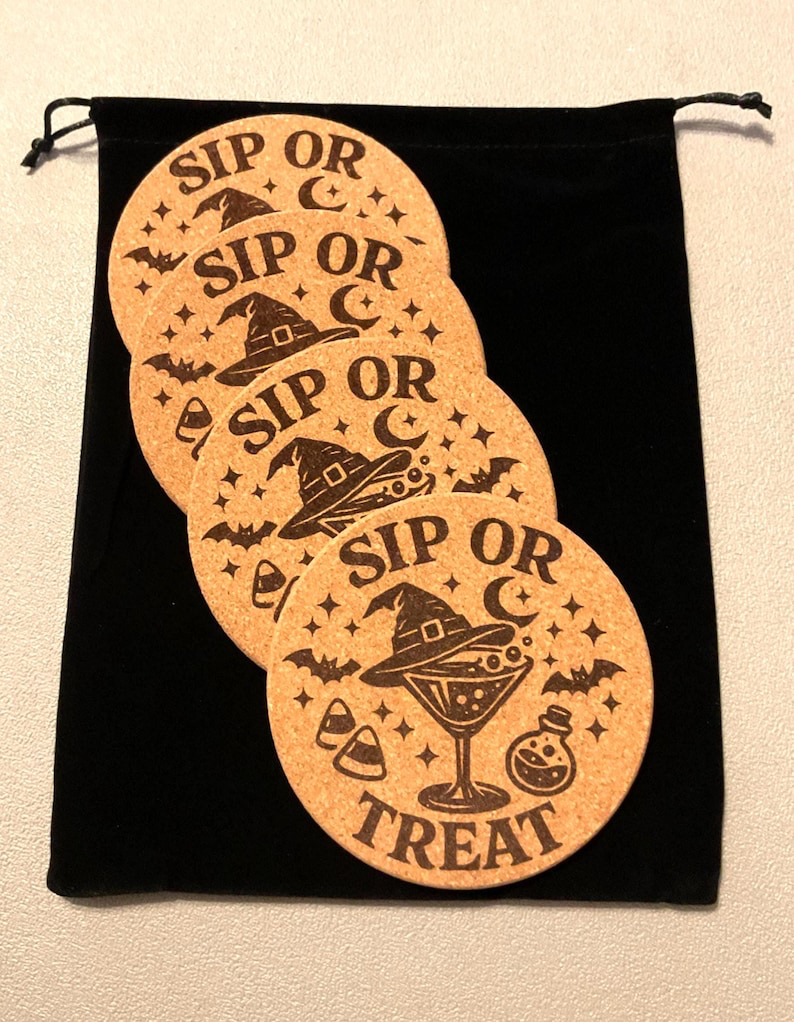
- Real packaging. A black velvet drawstring pouch costs very little and completely changes how the object is received. It also becomes the storage.
- Something specific. A last name, a date, an inside joke, a house. Specificity is what keeps an object out of the donation pile.
Buying a set that lasts
Coasters are a category where the cheap version fails visibly within a season. What to look for:
- Thickness. Under 4 mm and cork curls. Look for 5 mm or better; the good ones feel substantial in the hand.
- Density. Fine, tight granules hold detail. Coarse, crumbly cork sheds at the edges.
- Etched, not printed. Printing sits on top and abrades off. An etched mark is a change in the material itself.
- Consistency across the set. Look at all four in one photo. Uneven burn depth means the maker did not test.
- No coating claims you cannot verify. Bare cork is fine. Sealed cork often just means it stopped breathing.
Care, in one paragraph
Wipe with a dry or barely damp cloth. Never soak them, never run them through a dishwasher, and let them air-dry flat rather than stacked wet. A ring stain lifts with a pencil eraser or a light pass of fine sandpaper along the grain. Stored flat in their pouch, a set of cork coasters outlasts most of the furniture it protects. There is a longer version in our cork coaster guide.
Free resources worth keeping
- APCOR — the Portuguese cork association publishes free data on harvesting cycles, density grades, and sustainability claims. Useful if you want to know what you are actually buying.
- USDA Wood Handbook — a free, exhaustive reference on wood and bark behavior, moisture, and durability.
- Canva — free templates for menus, place cards, and drink signage that make a table look planned.
- Inkscape — free vector editor if you want to design your own coaster art rather than buy a set.
- Our studio gallery — every photo is free to use with attribution, including the coaster images here.
The point
A coaster is a small object that quietly says the room was prepared for you. That is worth eight dollars of cork and twenty minutes of a laser's time.
Design ideas for making your own are in our Halloween laser etching guide. Finished sets live in the shop, and custom or bulk runs go through the studio.
Featured pieces
From the studio
Hand-strung and finished in-studio. Every piece from our shop can be restrung or re-set at cost — just reach out.
 Etsy
EtsyHalloween “Sip or Treat” Cork Coasters (Set of 4) — Laser Etched — Gift Bag Included
$14.00View on Etsy →
 Etsy
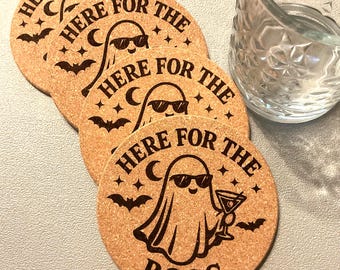
EtsyHalloween “Here for the Boos” Cork Coasters (Set of 4) — Laser Etched — Gift Bag Included
$14.00View on Etsy →
 Etsy
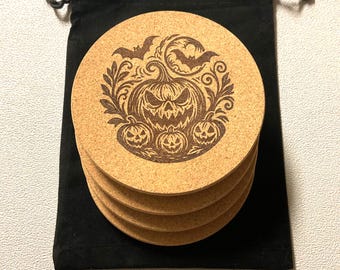
EtsySpooky Pumpkin Halloween Cork Coasters (Set of 4) — Laser Etched — Gift Bag Included
$16.00View on Etsy →
Keep reading
Laser Etching & Craft
Halloween Laser Etching Ideas: Cut, Etch, and Gift Better Every Year
Halloween laser etching ideas that work year after year — cork coasters, birch cutout pendants, materials, settings, free design resources, and how to keep it personal.
Laser Etching & Craft
Laser Engraved Cork Coasters: How to Choose, Use, and Care for Them
What makes cork the right coaster material, how laser engraving behaves on it, and a simple care routine that keeps a set looking sharp for years.
Laser Etching & Craft
Why Laser Etching Lasts a Lifetime: The Craft Behind a Permanent Mark
How laser etching bonds a design into metal, wood, and stone — why the mark outlasts ink and paint, and what to look for when you order a piece that should last.