Laser Etching & Craft · Guide
Why Laser Etching Lasts a Lifetime: The Craft Behind a Permanent Mark
How laser etching bonds a design into metal, wood, and stone — why the mark outlasts ink and paint, and what to look for when you order a piece that should last.
By Robert Anthony · · 6 min read
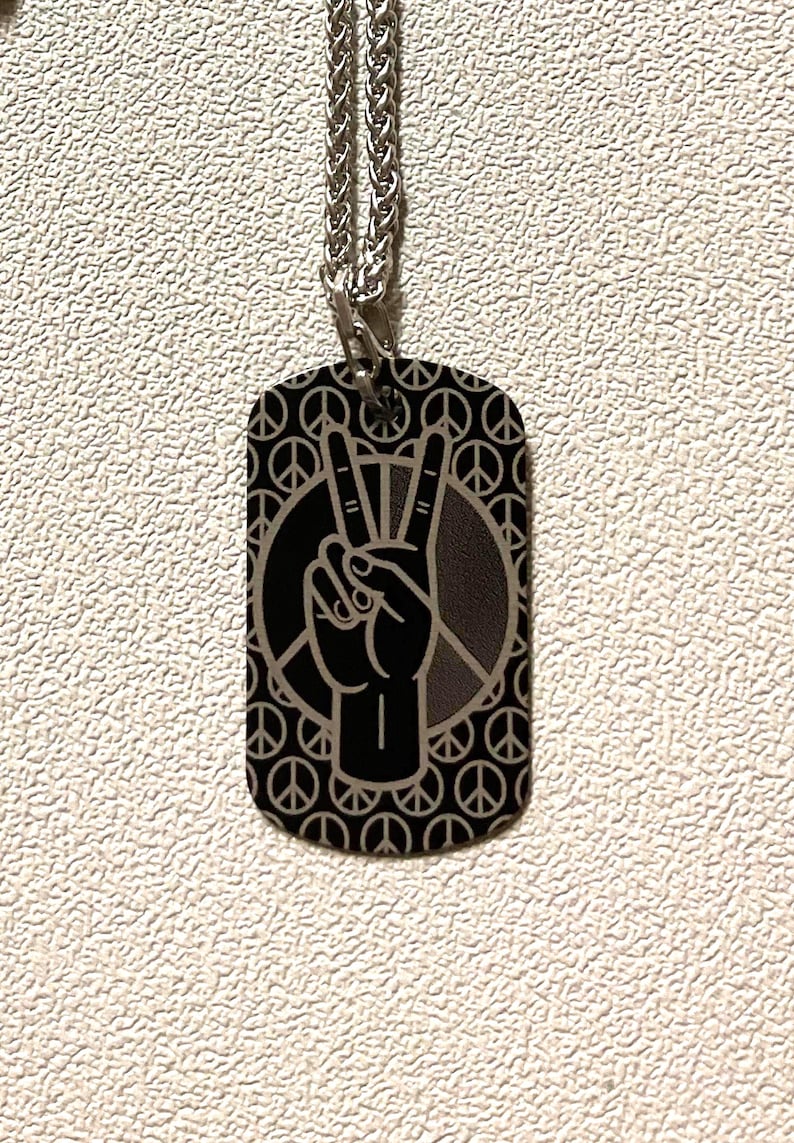
A laser etched piece does something ink and paint can't: it changes the material itself. The design isn't sitting on top waiting to fade — it's part of the surface. That's why a well-made laser etched tag, coaster, or card looks the same in year ten as it did the day it left the studio.
This is a short, honest walk through how the mark is made, why it lasts, and what separates a piece that ages well from one that doesn't.
How the mark is actually made
A focused laser beam heats a precise point on the surface. Depending on the material and settings, that heat either vaporizes a thin layer, oxidizes the surface to a different color, or bonds a coating into the substrate. There is no ink, no paint, and no adhesive involved — the design is a physical change to the material.
- Anodized aluminum — the laser removes the black anodized layer, revealing the bright metal underneath. Contrast is instant and sharp.
- Bare metal — the laser oxidizes the surface, leaving a dark, permanent mark that sits flush with the finish.
- Wood and cork — the laser scorches the fibers, producing warm brown and near-black tones with real texture.
- Slate and stone — the laser lightens the surface where it strikes, creating a pale, chalky contrast against the natural color.
Why the design lasts
Printed and painted designs sit on top of the material. Sweat, sunlight, dish soap, and abrasion slowly work them off. A laser etched design is the material — there is nothing to peel, chip, or fade. Wearing the piece polishes the surface around the mark, not the mark itself.
In practical terms, a laser etched aluminum dog tag will survive shower water, gym chalk, sunscreen, and years of everyday wear without needing to be redone. Wood coasters may darken with age, but the etched pattern stays crisp under the patina. A slate cheese board keeps its engraved name through hundreds of dishwasher cycles.
What separates a piece that ages well
1. Contrast that reads across the life of the piece
A good etch is legible from arm's length on day one and still legible from arm's length ten years later. That takes design decisions — line weight, spacing, and simplification — that a boutique studio makes at the proof stage. Our design guide for laser engraved dog tags walks through the choices we make on every custom job.
2. Material chosen for how it will be used
Aluminum wins for jewelry that gets worn daily. Wood suits gifts and home goods. Cork is right for absorbent coasters. Slate is the pick when weight and formality matter. Choosing the material to fit the use case is why a piece still looks intentional years later instead of worn-in-the-wrong-places.
3. A proof before the laser fires
A permanent process deserves a review step. Every custom order in our studio ships a digital proof before anything runs on the laser. Typos, spacing issues, and scale problems are cheap to fix in a PDF and expensive to fix in aluminum.
Where laser etching earns its keep
- Memorial pieces — names, dates, and dedications that must not fade.
- Everyday jewelry — dog tags, pendants, and cuffs that live on the body.
- Small-business branding — coasters, cards, and signage that has to hold up under real use.
- Milestone gifts — birthdays, weddings, retirements — occasions where the message should outlast the moment.
Ordering something meant to last
If you're commissioning a piece you want to keep, ask three questions of the studio: what material do you recommend for how I'll wear or use this, will I see a proof before you engrave, and how long has the studio been running the machine. A short conversation up front prevents most of the issues that show up later. Start a custom job through our services page, or browse finished pieces in the shop to see how the etch reads in hand.
Related reading: custom laser engraved gifts for every occasion and why boutique laser engraving studios do the best custom work.
Featured pieces
From the studio
Hand-strung and finished in-studio. Every piece from our shop can be restrung or re-set at cost — just reach out.

Keep reading
Laser Etching & Craft
How to Design a Laser Engraved Dog Tag: Contrast, Detail, and Legibility
A studio guide to designing a laser engraved aluminum dog tag — how contrast, pattern density, and icon choice decide whether the final piece reads clearly on the chest.
Laser Etching & Craft
Boutique Laser Engraving Studios: Why Small Shops Do the Best Custom Work
What a boutique laser engraving studio actually offers — smaller runs, real proofs, tighter design work, and pieces you can't get from a big print-on-demand shop.
Laser Etching & Craft
Custom Laser Engraved Gifts for Every Occasion: A Complete Guide
A practical guide to ordering custom laser engraved gifts — from dog tags and coasters to business cards — with ideas for birthdays, weddings, memorials, and corporate milestones.