Gemstone Guides · Guide
Opalite vs. Moonstone: What's the Difference?
Opalite and moonstone look similar but aren't the same. A clear breakdown of what each is, how they wear, and what to expect.
By Robert Anthony · · 5 min read
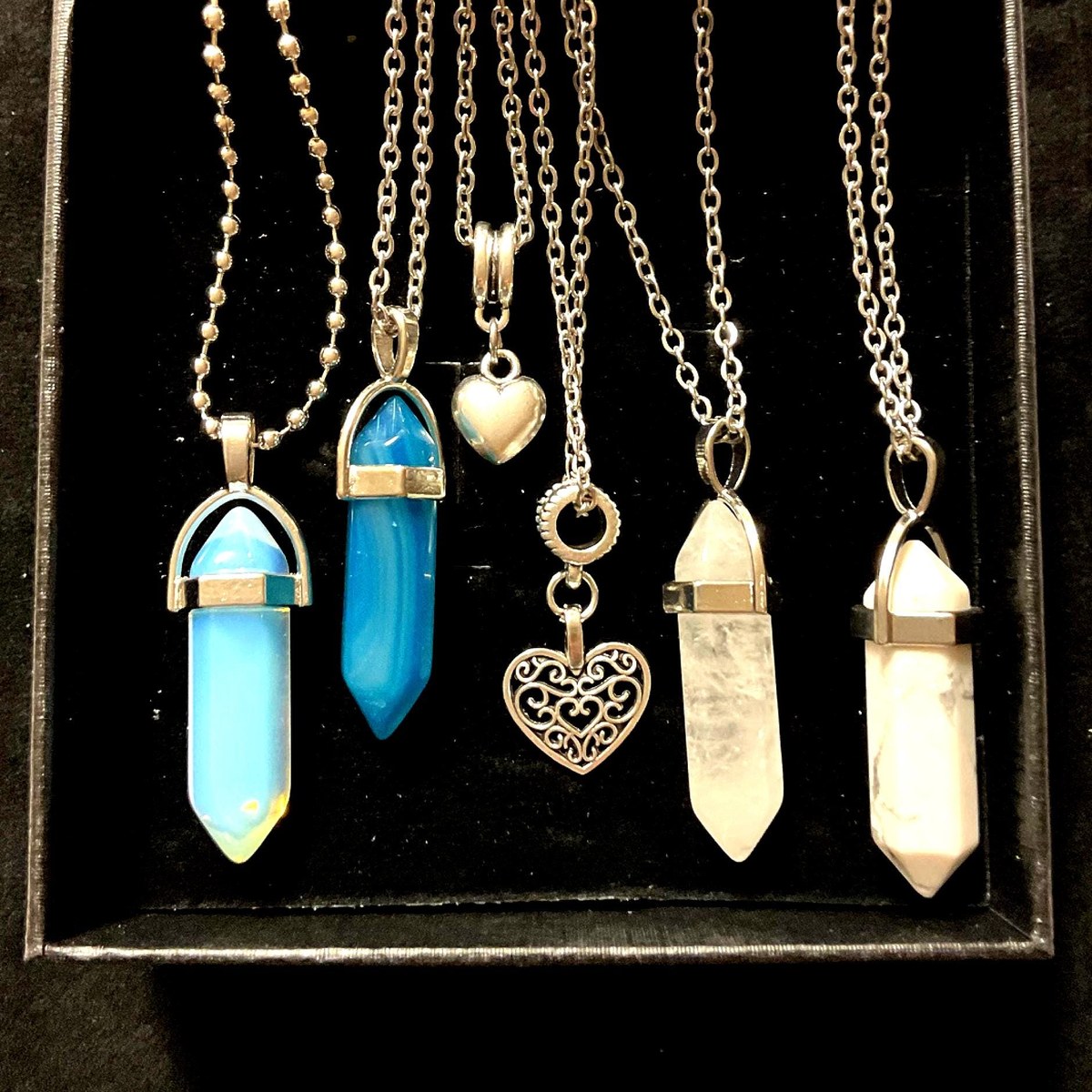
Opalite and moonstone are often confused — both have a soft blue glow, both are worn in similar settings. But one is a natural feldspar and the other is manmade glass, and the difference matters for care, price, and what you're paying for.
Moonstone (natural)
- Family: Feldspar (orthoclase / albite)
- Mohs hardness: 6–6.5
- Optical effect: adularescence — a floating internal glow
- Sources: Sri Lanka, India, Madagascar
The GIA's moonstone reference covers the mineralogy — the shimmer comes from light scattering between microscopic feldspar layers.
Opalite (manmade)
- Type: Opalized glass (not a natural stone)
- Mohs hardness: ~5.5
- Optical effect: milky blue-orange shift
- Sources: manufactured, primarily in Asia
How to tell them apart
- Look at the glow. Moonstone's glow floats and shifts with viewing angle; opalite's shift is a flatter color change.
- Check for inclusions. Natural moonstone often shows tiny internal cracks; opalite is uniformly clean.
- Ask the seller. Reputable listings label opalite as opalized glass or manmade — ours do.
Which should you buy?
Both are valid — opalite is a beautiful, affordable material and we use it deliberately in our crystal pendant sets. Moonstone commands a higher price for its rarity and optical effect. Neither is fake unless it's mislabeled.
Care
Both are soft. Dry cloth only, no ultrasonic, no soaking. See our stone care guide for the full routine.
Featured pieces
From the studio
Hand-strung and finished in-studio. Every piece from our shop can be restrung or re-set at cost — just reach out.
Keep reading
Gemstone Guides
Amethyst: Meaning, Hardness, and How to Wear It
A working guide to amethyst — its history, Mohs hardness, why it fades in sunlight, and how to keep the color rich.
Gemstone Guides
Mahogany Obsidian: A Guide to the Volcanic Glass
What mahogany obsidian is, where it forms, how it wears, and why it chips more easily than crystalline stones.
Stone Care & Cleaning
How to Care for Natural Stone Jewelry: A Complete Guide
Clean, store, and protect natural stone jewelry — from amethyst to obsidian — with a jeweler-tested care guide built to last.