Studio Notes · Guide
How Nature and Your Local Environment Spark Creativity
A walk outdoors resets attention and unlocks fresh ideas. Here's how time in nature — like the Ulatis Creek Walk in Vacaville — fuels creative work.
By Robert Anthony · · 6 min read
Most creative blocks aren't a shortage of ideas — they're a shortage of quiet. Screens narrow attention, deadlines compress it, and by the afternoon there's not much bandwidth left for the loose, wandering thinking that new work depends on. The fastest reset we've found isn't another app or a productivity trick. It's a walk outside.
This studio is based in Vacaville, California, and one of our regular reset routes is the Ulatis Creek Walk — a shaded path along Ulatis Creek that runs right through town. It's a short drive from the workshop, free, and it does something to a stuck brain that a second cup of coffee never quite manages.
Why nature helps you think
Psychologists Rachel and Stephen Kaplan called it Attention Restoration Theory: focused work uses a limited kind of attention that fatigues quickly, and natural environments give that system a chance to recover. Moving water, dappled light, and layered greenery hold your attention gently instead of demanding it. When you come back to your desk, the sharp, effortful attention creative work needs has been recharged.
You don't need a national park for this to work. A neighborhood creek, a tree-lined block, or a small city park is enough. What matters is that the environment is different from the one where you got stuck.
What a creek walk actually does for your work
- It breaks the loop. Staring at the same sketch, screen, or sentence teaches your brain to keep circling the same answer. Physically leaving the space breaks that loop.
- It restores peripheral thinking. Peripheral vision, ambient sound, and gentle motion re-engage the parts of your mind that make unexpected connections — the kind that lead to a better idea, not just a faster one.
- It slows the pace of decision-making. Walking is naturally about one decision per second: which foot, which direction, what to look at. That rhythm softens the pressure to produce a finished answer immediately.
- It gives you real reference material. Colors, textures, and light on water are hard to invent from scratch. A walk fills the well you'll be drawing from later.
The Ulatis Creek Walk, briefly
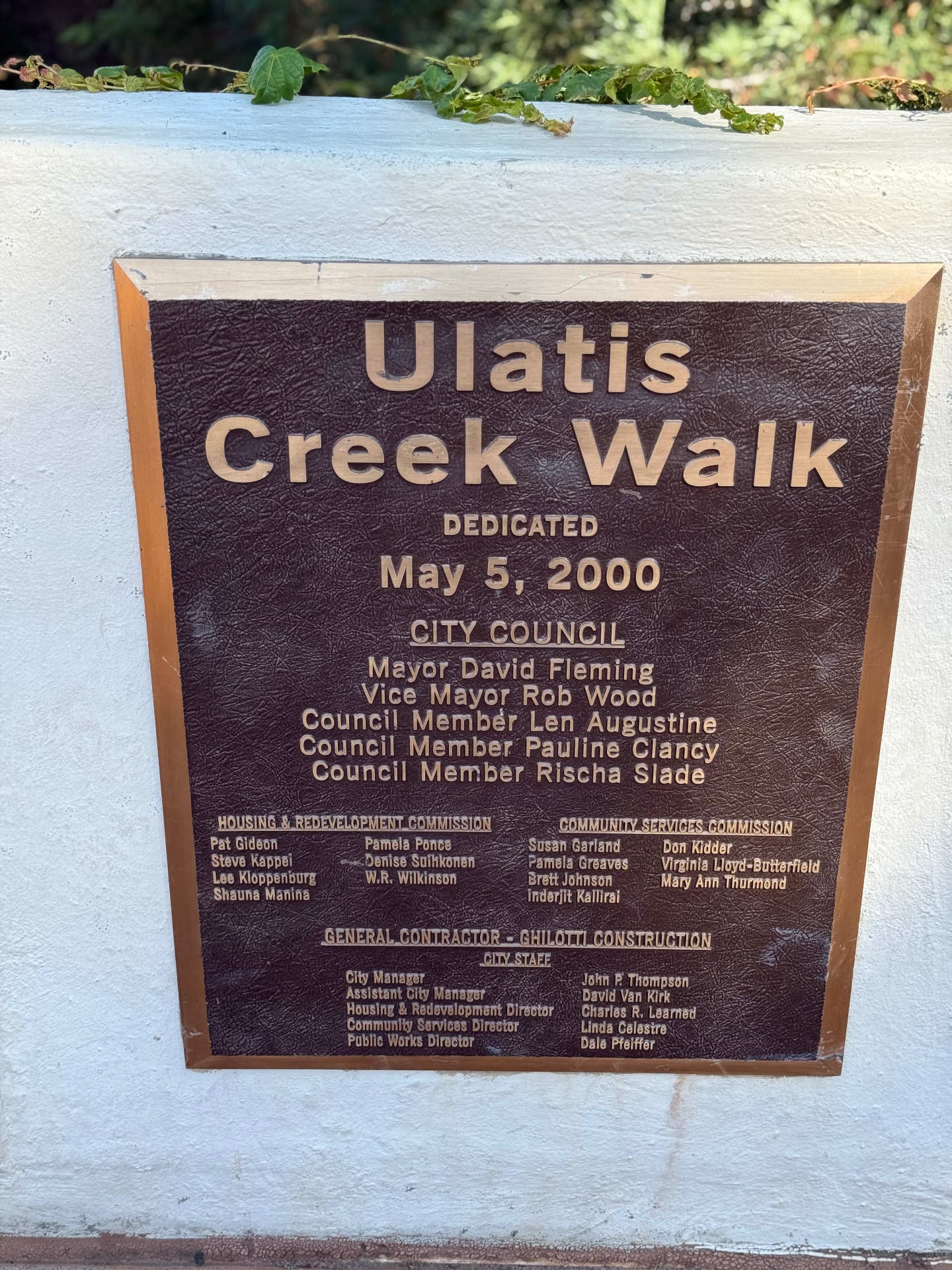
Ulatis Creek Walk is a paved path along Ulatis Creek in downtown Vacaville. It was dedicated in May 2000 and it's maintained as a public walkway with bridges, benches, and shaded sections — a small piece of preserved nature woven through a working downtown.
If you're local — Vacaville, Dixon, Fairfield, Suisun City, or anywhere in Solano County — it's an easy stop. If you're visiting, it pairs well with a walk through the downtown arch and the small shops nearby. See our Vacaville page for more about the area we work out of.
How to actually use a walk to unstick your work
- Leave the problem written down. Put the sketch, the paragraph, or the question on paper before you go. Then walk without it.
- Don't take a call. A phone conversation uses the same focused attention you're trying to rest. Put the phone away or leave it in the car.
- Look at three things closely. Water, bark texture, a plant you don't recognize. Specific looking is the opposite of anxious thinking.
- Let your mind wander. If your idea shows up mid-walk, note one line and keep going. Don't sit down and try to finish it out there.
- Come back and start small. Write one sentence, cut one bead, sketch one shape. Momentum returns faster than you'd expect.
Why this matters for handmade work
Every piece we make in the studio — a wire-wrapped pendant, a laser-etched dog tag, a stone bead bracelet — starts as a decision about proportion, color, and feel. Those decisions get worse when they're rushed and better when they've had some air. Walking Ulatis Creek is part of the process, even when it doesn't look like work. It's how we choose the color of a cord, decide whether a stone deserves a wrap or a bezel, or figure out which listing photo actually shows the piece honestly.
You can see the results in the shop, learn about our custom services, or read more studio notes like Why Supporting Local Businesses Still Matters and Why We Source Natural Stones.
A note on the photos
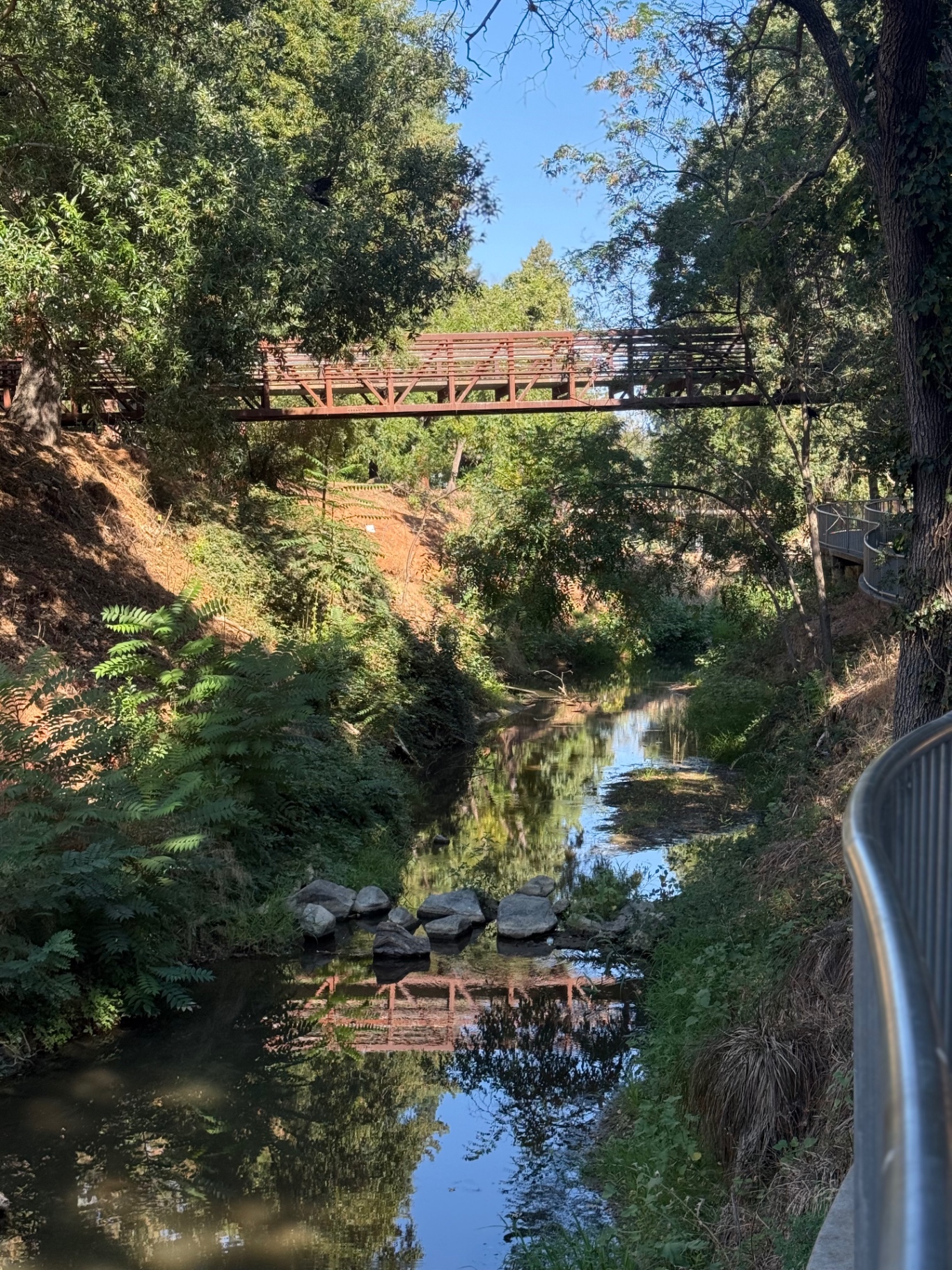
The photographs in this article — the bridge over Ulatis Creek and the dedication plaque — were taken by Robert and Angela on a recent walk. They're part of the free studio gallery and can be used by writers, artists, and creators with proper attribution to Robert Anthony Art.
Photos: Ulatis Creek Walk, Vacaville, California — original photographs by Robert and Angela, Robert Anthony Art.
Featured pieces
From the studio
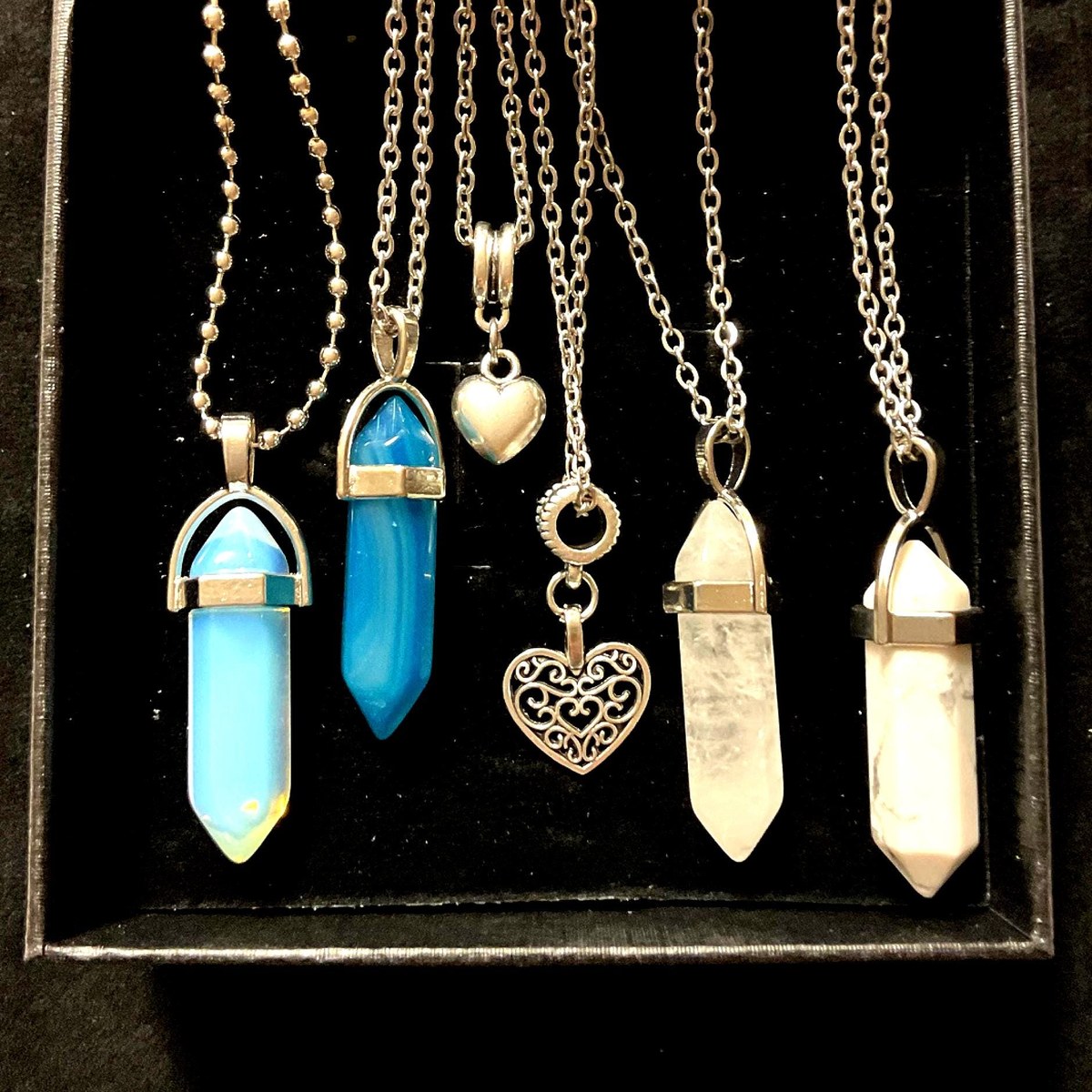
Hand-strung and finished in-studio. Every piece from our shop can be restrung or re-set at cost — just reach out.

Keep reading
Studio Notes
Why Supporting Local Businesses Still Matters
Supporting local businesses keeps money in your community, creates jobs, and connects you to real makers. Here is how to shop local in Vacaville and beyond.
Studio Notes
A Free Studio Photography Gallery for Writers, Artists, and Creators
Original in-studio photographs of natural stone jewelry and handmade pendants — free to use in articles and video with attribution.
Studio Notes
Why We Source Natural Stones (and How We Choose Them)
A studio note on why every stone we sell is natural, how we vet suppliers, and what that means for the pieces you wear.