Gemstone Guides · Guide
Goldstone: The Man-Made Stone That Earns Its Place
Goldstone is glass with copper crystals suspended inside — here is how it is made, how it wears, and why honest sellers never call it natural.
By Robert Anthony · · 6 min read
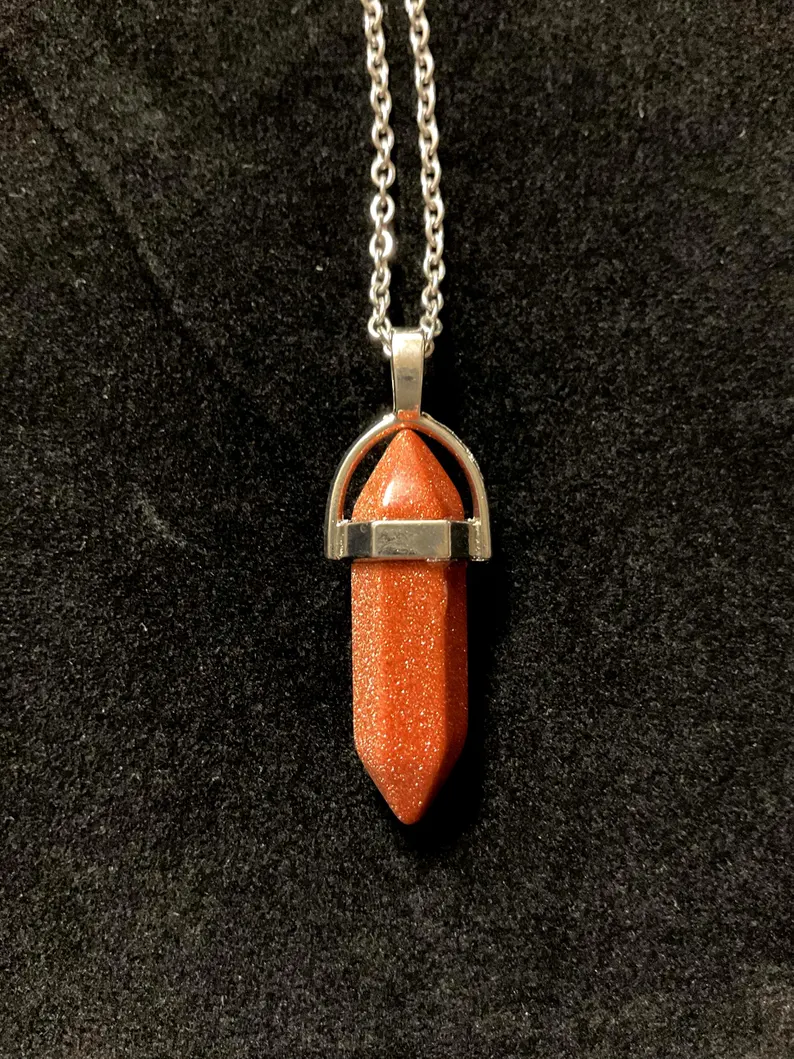
Goldstone is glass. Saying so out loud costs a sale about half the time, and it is still the right thing to do. What it is not is cheap or dishonest — it is a 17th-century Venetian glassmaking achievement that nobody has improved on.
How it is made
Copper salts are melted into molten silica in a low-oxygen furnace, then cooled slowly and precisely. Cool too fast and the copper stays dissolved; cool too slow and it clumps. Get it right and microscopic copper crystals precipitate throughout the glass, catching light from every angle.
Blue and green goldstone
Same process, different metal. Cobalt or manganese gives the blue and green versions their base color while the copper still provides the sparkle. Blue goldstone is often mislabeled as "blue sandstone" — same material.
Durability
- Hardness ~5.5 — softer than quartz, so it scratches against dust over time.
- Brittle — it is glass. A hard drop on tile chips the edge.
- Chemically inert — perfume and lotion do nothing to it, unlike porous naturals.
- Color never fades — the copper is in the glass, not on it.
Wear it, do not baby it
Goldstone is the piece to wear when you do not want to worry about a real stone. Keep it off concrete and out of a jumbled drawer and it will look identical in ten years.
Free references
- Corning Museum of Glass — free archives on aventurine glass history and technique.
- GIA Gem Encyclopedia — glass imitations and disclosure standards.
- Opalite vs moonstone — the other honest-glass conversation.
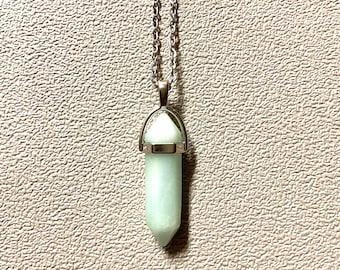
Browse the pendant collection — everything is described as what it is.
Featured pieces
From the studio
Hand-strung and finished in-studio. Every piece from our shop can be restrung or re-set at cost — just reach out.
Keep reading
Gemstone Guides
How to Read a Gemstone Listing Before You Buy
Decode the language in gemstone jewelry listings — treated, dyed, reconstituted, natural, and lab-created — so you know exactly what arrives in the box.
Gemstone Guides
Opalite vs. Moonstone: What's the Difference?
Opalite and moonstone look similar but aren't the same. A clear breakdown of what each is, how they wear, and what to expect.
Gemstone Guides
Dalmatian Jasper: What It Actually Is, and How to Wear It
A plain guide to dalmatian jasper — its real mineralogy, hardness, durability, and why the black spots are not what most listings claim.