Studio Notes · Guide
Why Small Boutique Collections Beat Mass Production
What a limited boutique collection actually means, how small runs are made, and why buying from independent designers gets you something no one else has.
By Robert Anthony · · 6 min read
A boutique collection is not a smaller version of a big brand drop. It is a different thing entirely: one person deciding what the work should look like, making a limited number of it, and standing behind every piece with their own name.
What 'limited' actually means
At scale, a design is chosen by a committee, tested against sales data, and produced in the tens of thousands. In a boutique run, the drawing exists because someone sat down and drew it. When the run ends, it ends — there is no reorder cycle keeping it alive for three seasons.
- Small numbers. Dozens, not thousands. You are unlikely to see it on someone else in the same room.
- No design-by-committee. The odd, specific choices stay in instead of being sanded off.
- Traceable. You can ask the maker what it is made of and get a real answer.
- Finite. Once a run closes, the piece becomes something you own and others can't buy.
The Muse collection, and how it happened
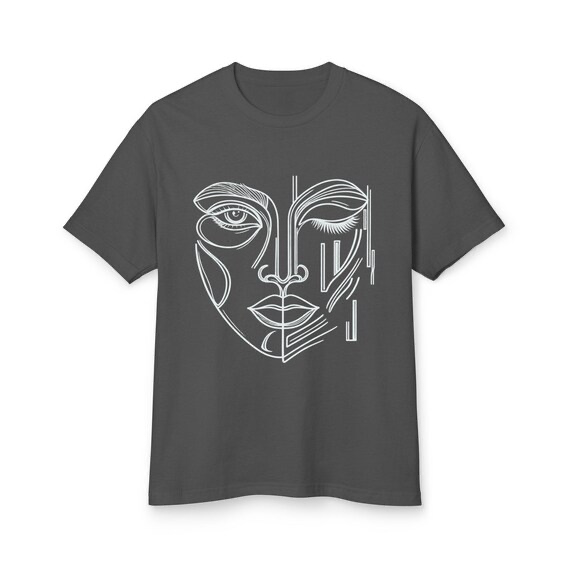
I'm Robert Anthony. I run a veteran-owned studio in Vacaville, California, with my wife Angela — mostly hand-strung stone jewelry and laser etching. The Muse collection started as one inked face in a sketchbook, drawn in a single sitting, not as a product plan.
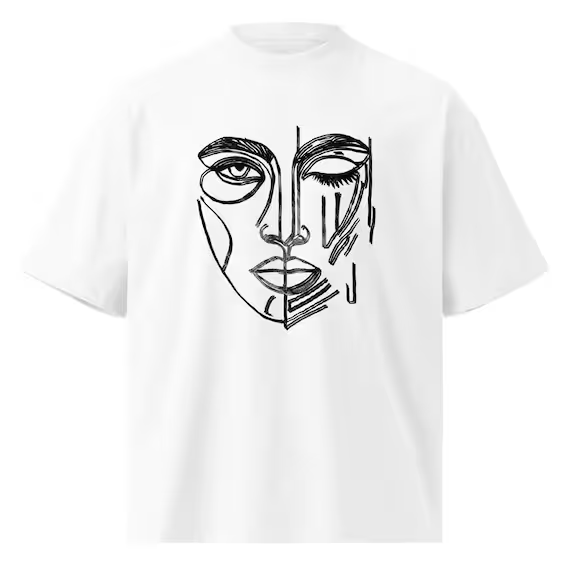
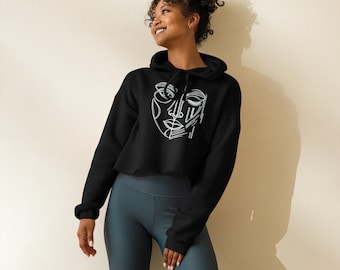
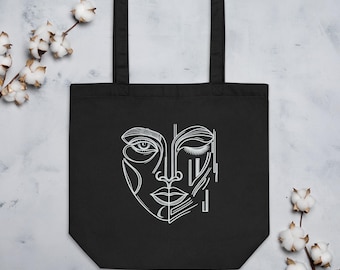
That drawing turned into a small line of garments — a unisex organic oversized tee, a crop hoodie, and an eco cotton tote — each one adjusted by hand so the linework sits right on that specific cut. If you want the full process, it is written up in the sketch-to-garment walkthrough.
What you are actually buying
A mass-market graphic tee is a licensing decision. A boutique piece is closer to buying a small print from the artist who made it — the difference is that you wear it. The value is in the specificity: a line that wobbles because a hand drew it, a placement chosen for that one cut, a run small enough that it stays uncommon.
How to support small creators (practically)
- Buy the odd one. The design that doesn't look like everything else is the one that only exists because a small maker made it.
- Leave a review with a photo. For an independent shop, that is the entire marketing budget.
- Share the listing, not just the screenshot. A link converts; a cropped screenshot does not.
- Ask questions before you buy. Makers would rather answer than process a return.
- Commission something. Most small studios will adapt a design for you — that's the part big brands can't do at all.
Why it matters beyond the purchase
Small runs waste less. Mass apparel overproduction is one of the industry's most documented problems — the Ellen MacArthur Foundation has been publishing on it for years. Making a few dozen of something you drew yourself is a fundamentally different footprint than making fifty thousand and discounting the remainder. And the money stays local: the SBA tracks how much of a small-business dollar recirculates in the community it was spent in.
Free resources
- SBA.gov — guidance and programs for small business owners.
- Ellen MacArthur Foundation — research on fashion overproduction.
- Our piece on supporting local businesses.
The current run is in the shop. If you want something adapted, etched, or made for you specifically, reach out — that conversation is the whole point of a small studio.
Featured pieces
From the studio
Hand-strung and finished in-studio. Every piece from our shop can be restrung or re-set at cost — just reach out.
Keep reading
Studio Notes
Turn Your Sketches Into Wearable Designs: From Paper to Printed Apparel
A studio walkthrough for turning a hand-drawn sketch into clean vector line art and printing it on tees, hoodies, tanks, and totes yourself.
Studio Notes
Why Supporting Local Businesses Still Matters
Supporting local businesses keeps money in your community, creates jobs, and connects you to real makers. Here is how to shop local in Vacaville and beyond.
Studio Notes
Why Creators Shouldn't Wait to Start Their Art
The best time to make art is before you feel ready. Why waiting costs more than beginning, and free tools, references, and communities to start with today.