
Styling & Wearing · Guide
How to Wear a Dog Tag Necklace Every Day (Without It Feeling Like a Costume)
Chain length, layering, skin sensitivity, and care for military-style dog tag necklaces you actually wear daily — from a veteran-owned studio.
By Robert Anthony · · 7 min read
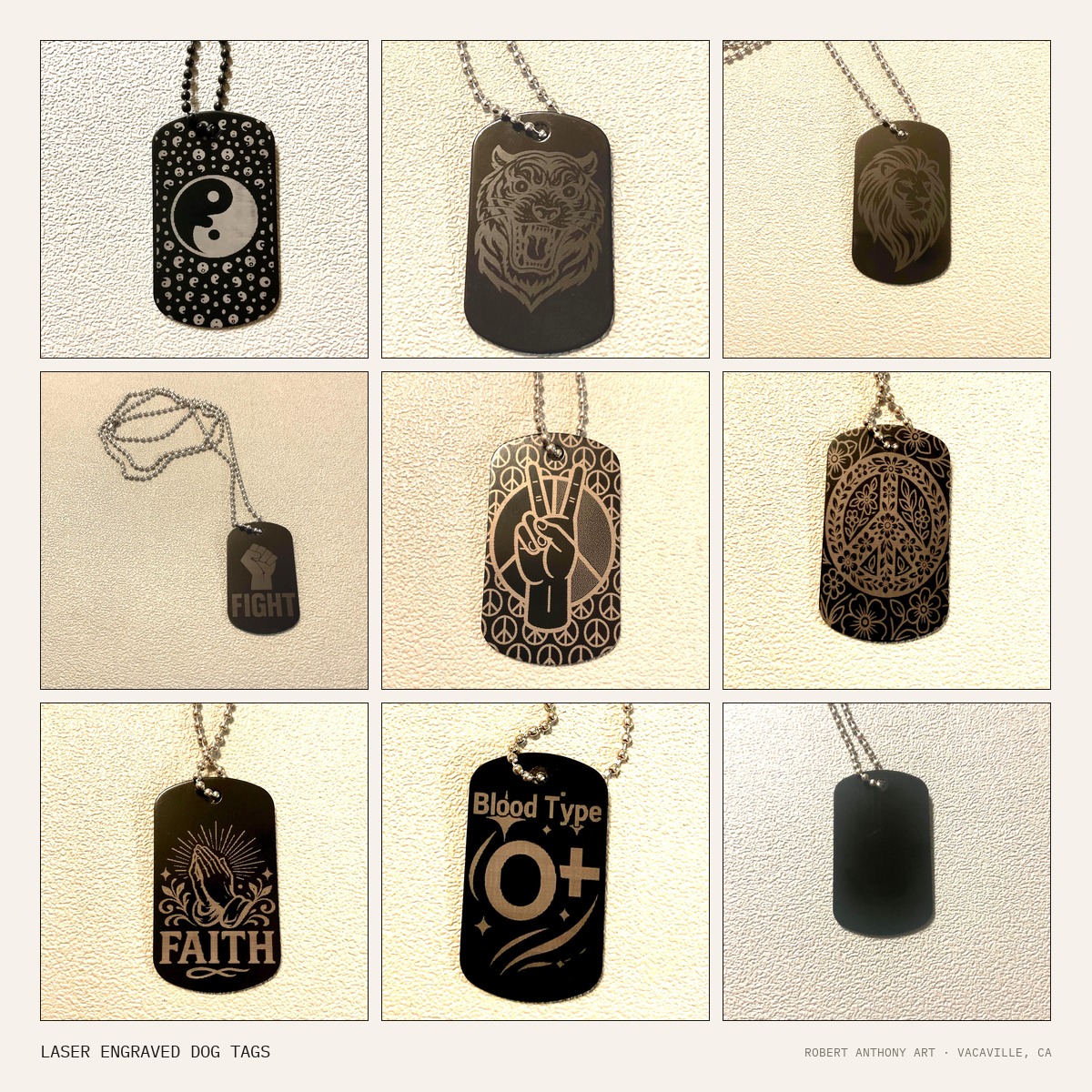
A dog tag is one of the few pieces of jewelry that reads as equipment rather than decoration. That is its advantage. Worn correctly it disappears into a daily uniform; worn carelessly it swings, flips, catches on collars, and starts to feel like a prop.
Robert is a veteran, and the tags that come out of the studio are cut and engraved on the same military-style aluminum blanks he wore. Here is what actually matters once one is around your neck.
Start with length, not design
Chain length decides whether a tag sits under a shirt or on top of it. Under a crewneck, 24 inches puts the tag mid-sternum and out of sight. Over a tee, 20 to 22 inches keeps it visible without landing near your stomach.
- 18 in — sits at the collarbone; visible with an open collar, too high under most shirts.
- 20–22 in — the everyday range for a visible tag on a t-shirt.
- 24 in — classic issue length; hides cleanly under layers.
- 30 in — statement length, best over a hoodie or heavy knit.
Ball chain versus link chain
Ball chain is the authentic choice and it has one real functional benefit: the clasp is a breakaway, so it releases under load instead of cutting into your neck. Link chain looks dressier and lasts longer against abrasion, but it will not give if it snags.
If you want a full breakdown of chain gauges and finishes, we wrote one: choosing a chain for a laser engraved dog tag.
Layering without noise
A tag is heavy and flat, which means it fights other pendants. The rule that works: one metal pendant, one stone or chain-only strand, with at least two inches of length separation. Anything closer and the tag clacks all day.
- Put the tag on the longest strand so lighter pieces sit above it.
- Pair matte aluminum with steel or blackened chain, not polished gold.
- Add a silicone tag silencer if you work around a desk or microphone.
Skin, sweat, and sensitivity
Aluminum is hypoallergenic for most people — no nickel — which is why it stays comfortable through workouts. The chain is more likely to be the irritant than the tag. If you react, switch to a stainless or titanium chain and keep the same pendant.
Keeping the engraving crisp
Laser etching on anodized aluminum removes the colored oxide layer to reveal bright metal beneath; there is no ink to fade. What dulls a tag is grit build-up in the engraved lines.
- Rinse under warm water after heavy sweat.
- Work a soft toothbrush over the engraving with a drop of dish soap.
- Dry fully — trapped water in a ball chain is what starts corrosion at the clasp.
- Store hanging or flat, not coiled in a pocket.
Free resources worth bookmarking
- The Aluminum Association — plain-language material properties and anodizing explainers.
- Inkscape — free vector software if you want to sketch your own tag artwork.
- Our studio gallery — original engraving photos, free to use with attribution.
Everything in the shop is engraved in Vacaville, California. If you want a name, unit, or date on a blank tag, send us a note.
Featured pieces
From the studio
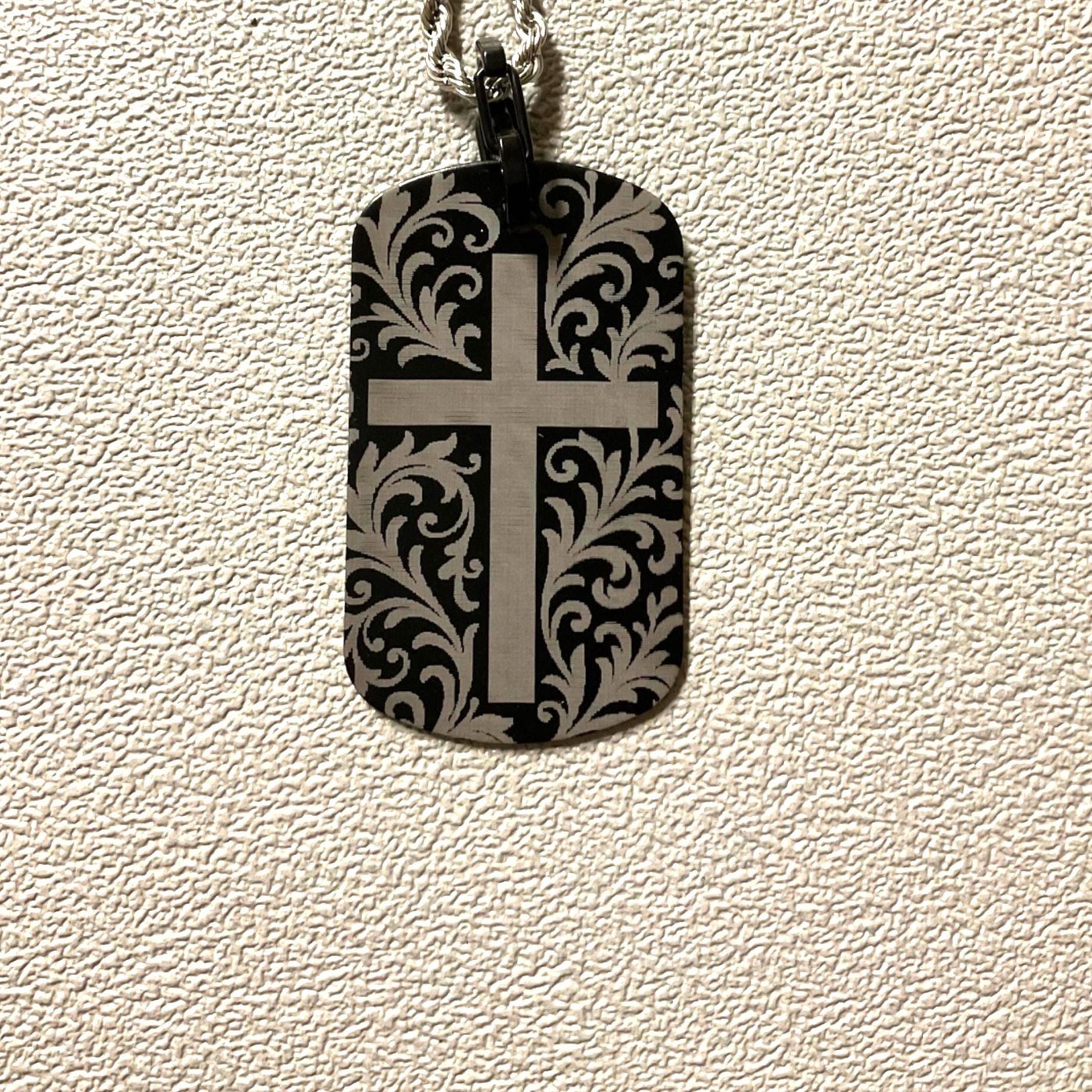
Hand-strung and finished in-studio. Every piece from our shop can be restrung or re-set at cost — just reach out.


Keep reading
Laser Etching & Craft
The Personalized Dog Tag Guide: What to Engrave
How to design a personalized laser-engraved dog tag — name conventions, phrases that age well, and layout limits.
Laser Etching & Craft
Choosing a Chain for a Laser Engraved Dog Tag: Rope, Wheat, and Ball
A practical guide to picking a chain for a laser engraved dog tag necklace — how rope, wheat, and ball chains wear, weigh, and pair with an aluminum pendant.
Styling & Wearing
How to Layer Necklaces Without Tangling: A Practical Styling Guide
Layer necklaces cleanly with lengths, weights, and clasp tricks that keep chains from knotting — styled for everyday wear and gift-ready sets.