
Studio Notes · Guide
Why Small Shops Should Offer Delivery and Stay Flexible With Customers
Delivery, flexible policies, and treating the customer well aren't just for giants like Amazon. Here's how small shops win by doing the same — with sources.
By Robert Anthony · · 7 min read
Small shops and boutiques don't lose customers because their products are worse than the big-box alternative. They lose customers because buying from a giant is easy — one tap, delivered tomorrow, returned without a conversation. The good news is that most of what makes that experience feel effortless isn't proprietary technology. It's a set of choices any small shop can make: offer delivery, be flexible with policies, and treat the customer like a person worth keeping.
The bar customers actually expect now
Customer expectations have been reset by a decade of fast, frictionless online buying. According to PwC's Future of Customer Experience survey, 73% of shoppers say experience is a decisive factor in what they buy, and one in three will walk away from a brand they love after a single bad experience. Salesforce's State of the Connected Customer puts it more plainly: the vast majority of customers say the experience a company provides matters as much as its products.
That is the bar. Not the assortment, not the price — the experience of buying. Small shops that meet that bar keep customers for years. Small shops that don't get compared to the giant and lose.
The one brand every small shop is quietly competing with
Amazon is the obvious example, and it's worth understanding what actually made the company enormous. It wasn't inventory. Sears had inventory. It wasn't low prices. Walmart had lower prices in many categories for years. What Amazon built, and kept building, was convenience as a product: one-click ordering, easy returns, and fast delivery treated as the baseline instead of the upgrade. Jeff Bezos has said for two decades that the company is customer-obsessed, not competitor-obsessed, and the operational bet behind Prime — that people will pay a flat fee to make friction disappear — is now the way most Americans expect to shop.
You are never going to out-warehouse Amazon. You don't have to. What you can do is copy the underlying idea: remove friction from the parts of buying that annoy people the most. Delivery is the biggest one.
Why offering delivery matters, even for a small shop
McKinsey's research on last-mile delivery has found that same-day and next-day options are no longer premium features — they're expected — and that local sellers who offer them convert meaningfully better than sellers who don't. You don't need a fleet of vans to do this. You need three things:
- A clear local radius. Publish the ZIP codes or towns you'll deliver to. Ambiguity kills the sale.
- A predictable window. "Delivered within 48 hours in Solano County" beats "contact for details" every time.
- A fair fee — or free above a threshold. A flat $5–$10 fee, or free over $50, is the model most shoppers already understand.
Local delivery also does something Amazon can't: it lets you hand the piece to the customer yourself. For handmade or custom work, that moment is part of the product.
Flexibility is a policy, not a favor
The phrase "the customer is always right" is older than any of the companies quoting it. It's usually credited to Harry Gordon Selfridge of Selfridges in London and Marshall Field of Marshall Field's in Chicago around 1905–1909. The point was never that the customer is literally correct on every detail. The point was that the shop's default posture is believing the customer and solving the problem, rather than defending the policy.
That posture is the cheapest competitive advantage a small shop has. It costs nothing to say yes to a reasonable return, remake a piece that arrived wrong, or hold an item for a customer whose paycheck hits Friday. And the math on doing so is not sentimental. Harvard Business Review has reported for years that acquiring a new customer costs several times more than retaining an existing one, and that even a small lift in retention can meaningfully raise profits. Flexibility is retention.
What flexibility actually looks like
- Honor the spirit of the request. If someone bought the wrong chain length, swap it. Don't make them read a policy back to you.
- Communicate before the customer has to ask. A short message when an order ships, when it's delayed, or when a stone came in different from the photo prevents most complaints.
- Offer options, not verdicts. "I can remake it, exchange it, or ship a replacement — which would you rather?" turns a problem into a choice.
- Make custom work custom. A boutique that treats every order like a template gives up its main advantage over a giant.
How this translates to a real small shop
Robert Anthony Art is a veteran-owned studio in Vacaville, California, run by Robert and Angela. Every piece is made, packed, and shipped by the two of us, which means we can move faster on the human parts than a warehouse ever will. A few of the things we do on purpose:
- Local delivery in Solano County. If you're in Vacaville, Dixon, Fairfield, Vallejo, Napa, Benicia, or Suisun City, we can hand-deliver orders and custom laser etching jobs instead of shipping them. It's faster, it's greener, and it lets us verify the piece is right before it leaves our hands.
- Free local pickup. If you'd rather meet us in Vacaville, we'll coordinate a time that works. No shipping fee, no waiting on a carrier.
- Custom orders are actually custom. Chain length, cord color, engraving text, quantity — see the services page for what we make to order.
- Quality that holds up. Every piece is made, packed, and shipped by Robert and Angela, so the person who made it is the same person who hands it to you.
None of that is charity. It's how a two-person studio competes with a warehouse the size of a small city — by being the shop where the answer is usually yes, and where the person who made the piece is the same person who hands it to you.
A short checklist for small shops and boutiques
- Publish a delivery radius and a delivery window. Put it on the site, not in a DM.
- Offer at least one flexible option per order. Pickup, delivery, gift wrap, engraving — one small yes changes the sale.
- Write policies in plain language. Short, clear, and generous where you can afford to be.
- Reply to every message within a business day. Silence loses more sales than price.
- Treat every custom order like the sample piece for the next one. Word of mouth is your ad budget.
The takeaway
Delivery and flexibility aren't features you add on top of a small shop. They're the reason a small shop exists in the first place. Giants win on scale. Small shops win on the parts that don't scale — the local drop-off, the remade clasp, the note in the box, the seller who remembers your order. Build the experience customers already expect from the big brands, then add the parts only you can offer.
If you'd like to see what that looks like in practice, browse the shop, read more about our local service in Vacaville and Solano County, or read Why Supporting Local Businesses Still Matters for the broader case.
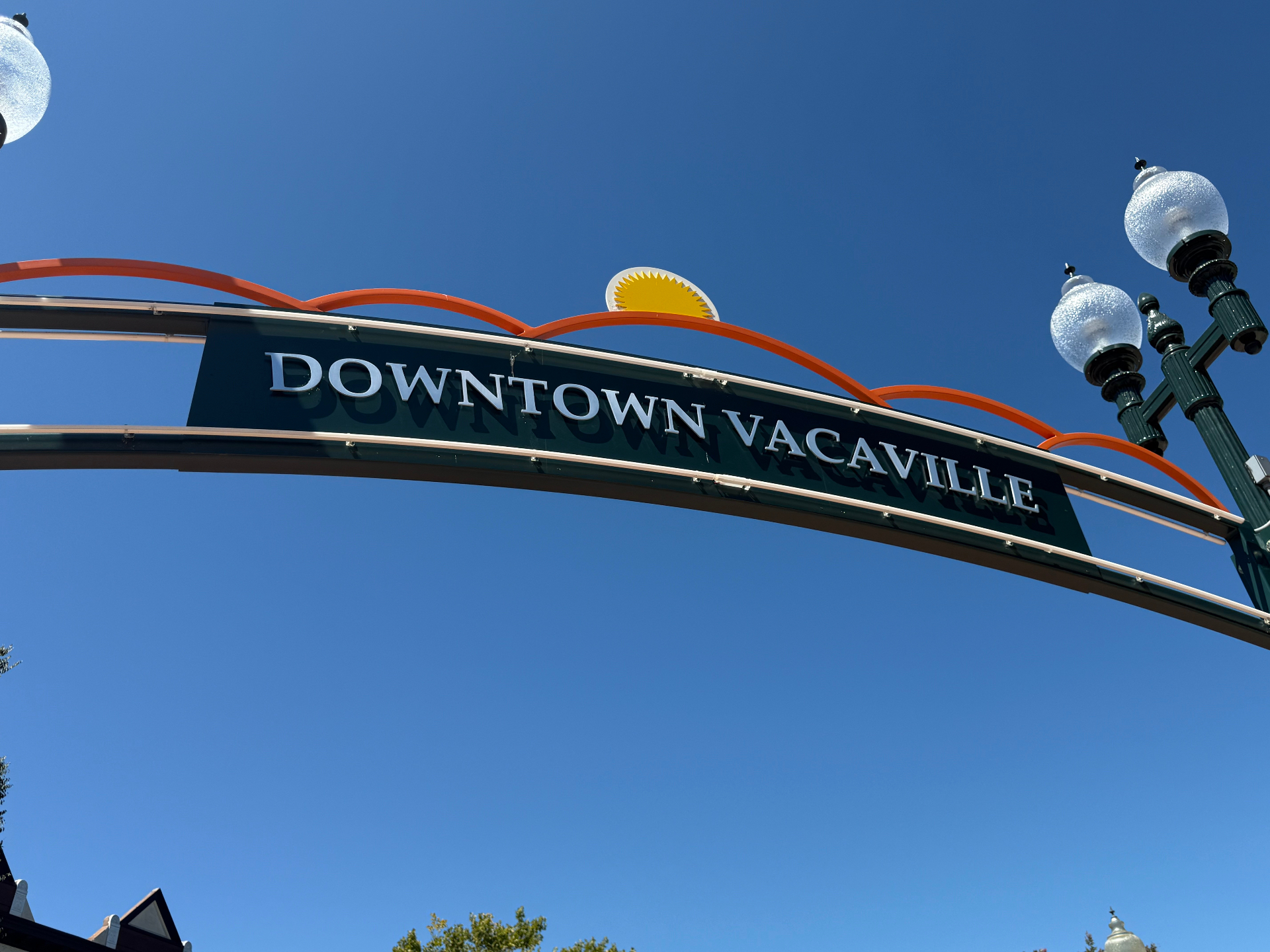
Photo: Downtown Vacaville arch sign — original photograph by Robert and Angela, Robert Anthony Art.
Keep reading
Studio Notes
Why Supporting Local Businesses Still Matters
Supporting local businesses keeps money in your community, creates jobs, and connects you to real makers. Here is how to shop local in Vacaville and beyond.
Studio Notes
Veteran-Owned Businesses to Support in Vacaville, CA
A short guide to finding and supporting veteran-owned small businesses in Vacaville and Solano County, including handmade jewelry and custom laser etching.
Laser Etching & Craft
Custom Laser Etching for Small Businesses in Solano County
Custom laser-etched coasters, dog tags, and business cards for Solano County small businesses, nonprofits, and events — with local pickup in Vacaville.